What a Front Porch Actually Does to a Neighborhood (It's More Than You Think)
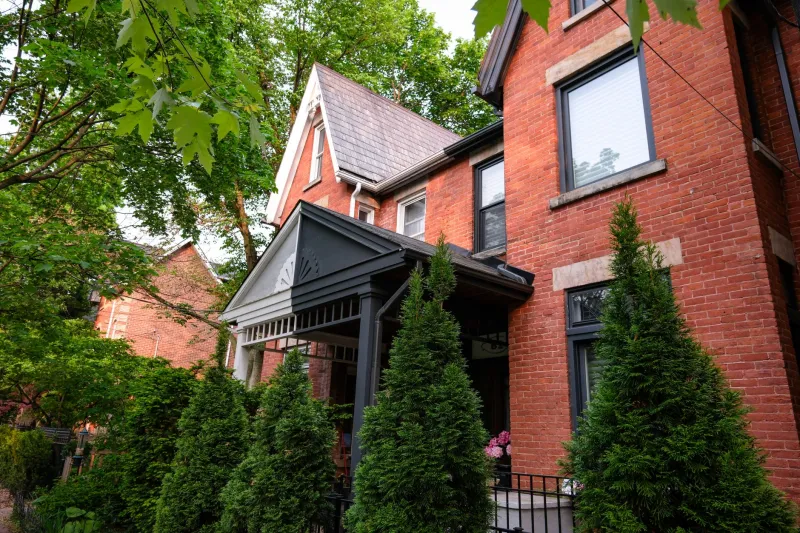
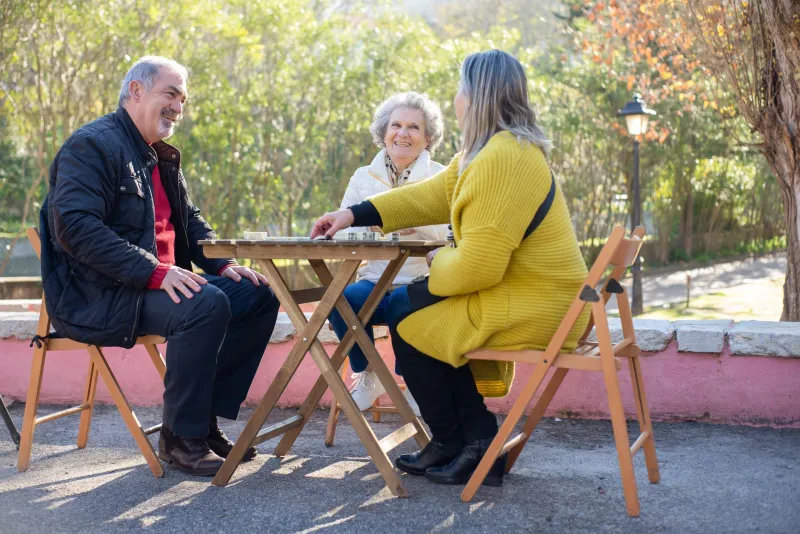
There's a moment that happens in certain neighborhoods that almost never happens in others. You're walking to your car in the morning, coffee in hand, and your neighbor calls out from their porch. You stop. You talk for three minutes about nothing particularly important — the weather, a pothole on the corner, whether the new taco place downtown is any good. You go on with your day.
That tiny, unremarkable exchange is actually doing something enormous.
It's the kind of spontaneous, low-stakes social contact that researchers say is a cornerstone of genuine community life. And it almost always starts with a front porch.
The Difference Between a House That Faces In and One That Faces Out
For the better part of the last 50 years, American residential design trended heavily toward the private backyard model. The logic made sense on the surface: give families their own outdoor sanctuary, walled off from the street, where they could barbecue and let the kids run around without an audience. Privacy was marketed as a luxury. Fences went up. Garages moved to the front of the house. Front stoops shrank or disappeared entirely.
What nobody quite accounted for was the social cost.
When a home's entire livable outdoor space faces inward — away from the street, away from neighbors, away from the sidewalk — it quietly removes its residents from the informal life of the neighborhood. You can live next door to someone for a decade and never once have an unplanned conversation with them, because neither of you ever occupies a space where that conversation could naturally begin.
Front porches flip that dynamic. They create what urban designers sometimes call a "transitional zone" — a space that's yours, but also visible and accessible. You're not fully public, but you're not hidden either. That in-between quality is exactly what makes them work.
What the Research Actually Says
This isn't just a sentimental argument about the good old days. There's a real body of evidence linking front-facing design to measurable social outcomes.
A widely cited study out of Johns Hopkins found that streets with front porches had significantly higher rates of neighbor-to-neighbor interaction than comparable streets without them. Residents on porch-lined blocks reported knowing more of their neighbors by name, feeling safer in their neighborhood, and experiencing lower levels of social isolation.
Separate research from environmental psychologists has shown that semi-public outdoor spaces — the kind a front porch creates — serve as what sociologists call "weak tie" generators. Weak ties are the casual acquaintances and friendly-but-not-close relationships that turn out to be surprisingly important for mental health, job opportunities, and a general sense of belonging. You don't need your neighbors to be your best friends. You just need to know them well enough to wave, to ask a favor, to notice if something seems off.
Front porches make that possible in a way that privacy fences simply don't.
Eyes on the Street — and Why It Matters
Jane Jacobs, the legendary urban thinker, talked about the concept of "eyes on the street" back in the 1960s, and it's held up remarkably well. The idea is simple: streets feel safer and more alive when people are actually present on them, even casually. Porches put people in that visible, semi-engaged position. Someone sitting on a front porch is, by definition, watching the street — not in a surveillance-state kind of way, but in the way that any human presence signals that a place is occupied and cared for.
Neighborhoods with active front porches tend to have lower rates of petty crime. They also tend to feel more welcoming to pedestrians, which encourages more walking, which puts more people on the street, which creates more of those incidental interactions that build community over time. It becomes a self-reinforcing cycle.
This is part of why walkable, village-style communities — the kind designed around human-scale streets rather than car throughput — often prioritize front-facing architecture. It's not nostalgia. It's intentional design for social health.
The Property Value Angle (Yes, Really)
Here's something that might surprise you: front porches have a documented positive effect on home values, particularly in neighborhoods where walkability and community character are already prized.
Real estate analysts have found that homes with covered front porches command a premium in many markets, and that premium has been growing as buyer preferences shift toward community-oriented living. Part of that is pure aesthetics — a well-designed porch adds curb appeal in an immediate, tangible way. But part of it is something harder to quantify: buyers are increasingly paying for the feeling that a neighborhood will actually feel like a neighborhood.
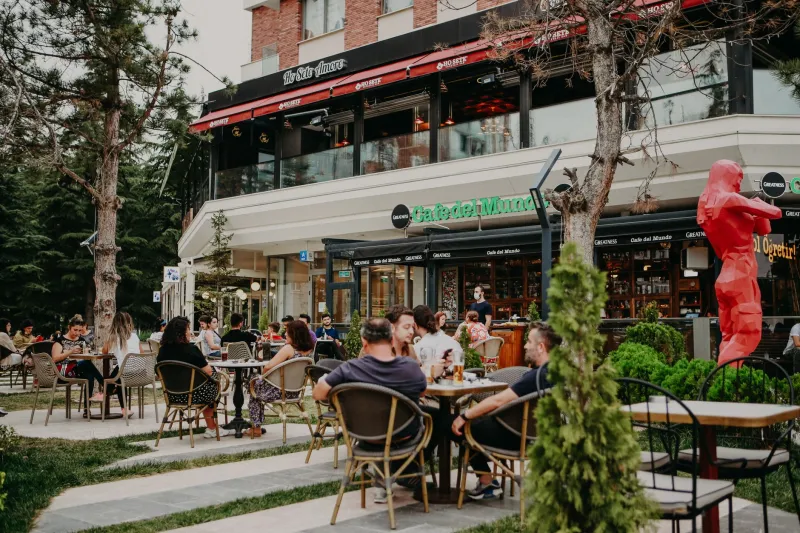
When you can look down a street and see porches with rocking chairs and potted plants and the occasional person with a book, you're getting a visual signal that people here actually live here. They're not just sleeping here between commutes.
Designing for Accidental Friendship
One of the most interesting things about front porch culture is that it doesn't require anyone to be particularly outgoing. You don't have to be an extrovert to benefit from it. The whole point is that it lowers the activation energy for social contact to almost zero.
You're already outside. Your neighbor is already outside. You're both doing ordinary things. A wave happens. A comment about the weather happens. Over weeks and months, those micro-interactions accumulate into something that genuinely feels like knowing someone.
That's not an accident. It's architecture doing social work.
At Front Street Village, this is something we think about a lot. The way homes are oriented to the street, the way sidewalks connect to front entries rather than side doors, the way shared green spaces are positioned so that residents naturally pass through them rather than around them — all of it is in service of creating the conditions for that accidental friendship to happen.
You can't engineer community. But you can design spaces that make it a lot more likely.
The Porch Isn't Just a Porch
If you're in the market for a home and you're weighing neighborhoods, it's worth looking past square footage and school ratings for a moment and asking a simpler question: does this street feel alive?
Are there people visible outside? Are there front stoops and porches and benches? Is there a sense that residents actually occupy the shared spaces of the neighborhood, or does everyone seem to disappear the moment they pull into their garage?
The answers tell you a lot — not just about the neighborhood as it is today, but about what your daily life will feel like once you're part of it.
A front porch is a small thing. But what it represents — a home that reaches toward its community rather than retreating from it — turns out to matter quite a bit.