The Spaces Between: How Third Places Are Quietly Saving Modern Community Life
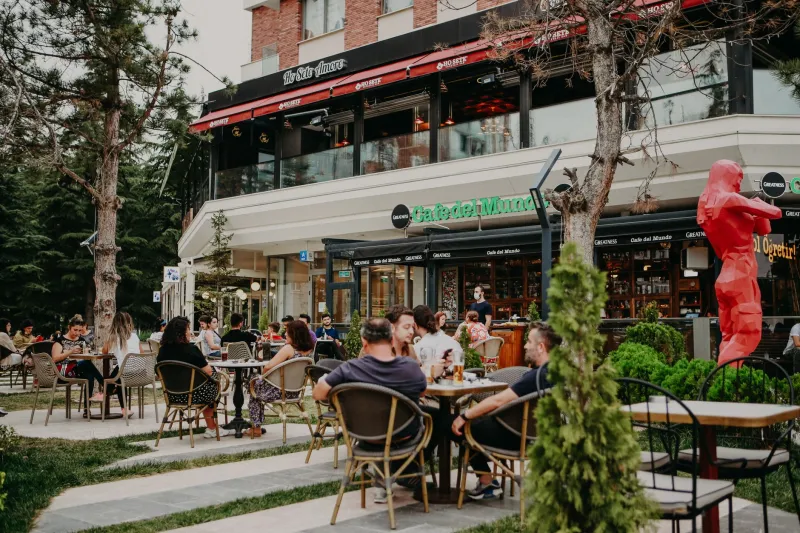
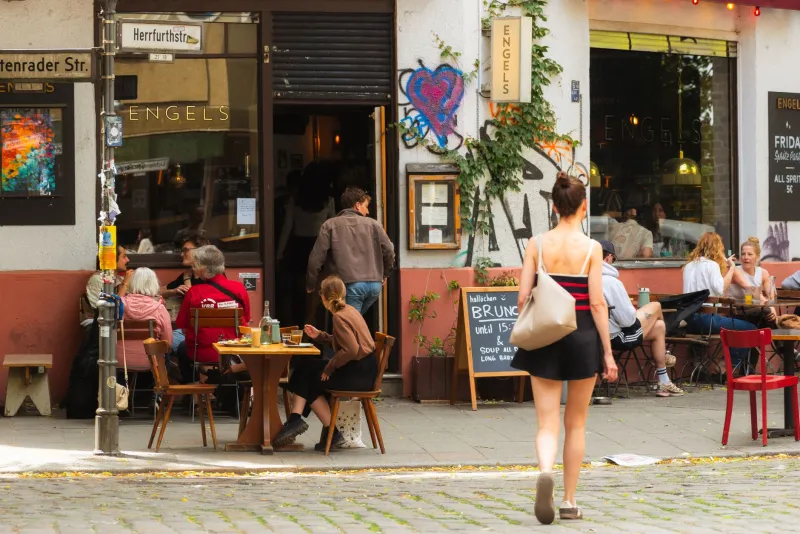
Picture the last time you ran into someone you knew — not planned, not on a calendar — just a genuine, unexpected collision with another human being that made your day a little better. Where did it happen? Probably not at home. Probably not at the office. Chances are it was somewhere in between: a sidewalk café, a farmers market, a community garden, a corner bookshop that somehow still exists.
That somewhere in between has a name. Sociologist Ray Oldenburg called it the "third place," and he spent decades arguing that these informal gathering spots are the actual glue holding communities together. His thesis, laid out in his 1989 book The Great Good Place, was deceptively simple: people need three kinds of spaces to thrive. Home. Work. And everything else. Strip away that third category, and what you're left with isn't just inconvenience — it's loneliness, civic disengagement, and a slow erosion of the social skills that make neighborhoods feel like neighborhoods.
Here's the uncomfortable truth: most of America spent the last half-century systematically bulldozing its third places.
How Sprawl Stole Our Gathering Spots
Post-war suburban development was built on a single organizing principle — separation. Homes here. Retail there. Offices somewhere else entirely. It was efficient on paper and devastating in practice. When you have to drive fifteen minutes to get a cup of coffee, you don't linger. You don't bump into your neighbor. You don't strike up a conversation with a stranger who turns out to share your exact taste in weird hobbies. You get your coffee, you get back in your car, and you go home slightly more isolated than you were before.
Repeat that pattern across millions of households for seventy years, and you start to understand why the U.S. Surgeon General issued a formal advisory on loneliness in 2023 — framing it as a genuine public health crisis. We didn't just build car-dependent suburbs. We built social deserts.
The third places that once anchored American civic life — the corner bar, the town square, the public library reading room, the neighborhood diner where everyone knew your order — didn't disappear because people stopped wanting them. They disappeared because zoning codes, parking minimums, and development patterns made them economically impossible to sustain.
What a Real Third Place Actually Does
It's worth being specific here, because "third place" can sound abstract until you break down what these spaces actually accomplish.
They lower the barrier to human contact. You don't need an invitation, an agenda, or a reason to be there. You just show up, and the space does the social work for you. That's enormously valuable in an era when most adult friendships require calendar coordination three weeks in advance.
They create what researchers call "weak ties" — connections that aren't close friendships but aren't strangers either. Studies consistently show that weak ties are disproportionately important for mental health, job opportunities, and a general sense of belonging. The guy who nods at you every Tuesday morning at the coffee counter? That's a weak tie. Multiply him by thirty, and you have something that feels remarkably like community.
They also function as informal civic infrastructure. Movements start in coffee shops. Neighborhood watch programs get organized at the park. Local elections get decided — at least partly — by conversations that happen in places where people gather without specific purpose. Remove those spaces and you don't just lose convenience. You lose the connective tissue of democratic life.
Designing Third Places Back Into the Picture
The good news is that some developers and planners are paying attention. Mixed-use communities built around walkability and genuine human-scale design are deliberately engineering third places back into the fabric of daily life — not as amenities bolted on as afterthoughts, but as foundational elements of the neighborhood's identity.
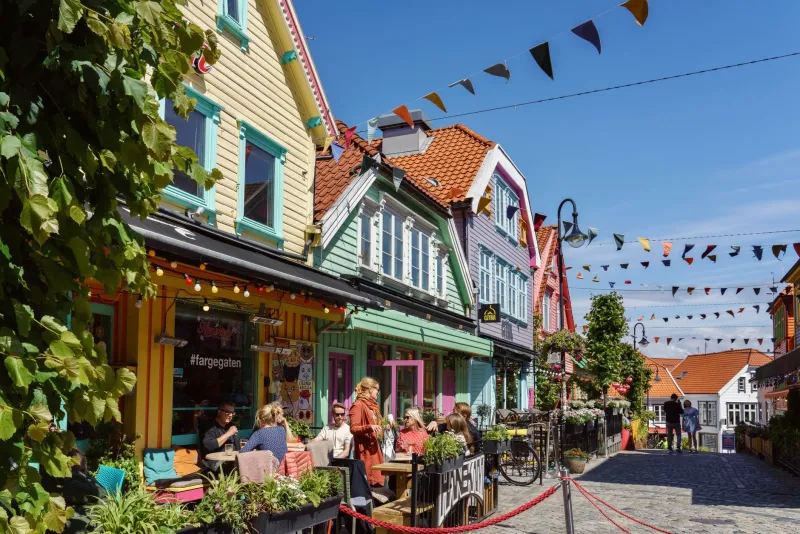
At Front Street Village, that philosophy shapes decisions from the ground up. A café that spills onto a tree-lined sidewalk isn't just a place to grab a latte — it's a social pressure valve, a spot where the rhythm of neighborhood life becomes visible and participatory. A well-designed park with seating that faces outward, toward foot traffic rather than away from it, does something that a backyard swimming pool simply cannot: it puts you in contact with the broader community rather than sealing you off from it.
Maker spaces and community workshop areas serve a similar function, attracting the kind of curious, project-oriented people who tend to be natural connectors. Farmers markets, outdoor performance spaces, and community gardens create recurring rituals — weekly or seasonal reasons to show up in the same place and run into the same people, slowly converting strangers into neighbors.
The key design insight is that these spaces need to be genuinely walkable from residential areas, not technically accessible but practically car-dependent. A third place that requires a seven-minute drive is functionally not a third place. It's just another destination.
The Mental Health Case You Weren't Expecting
If the civic and social arguments don't move you, consider the psychological ones. Research published in journals ranging from Urban Studies to Environment and Behavior has consistently linked access to informal social spaces with lower rates of depression, anxiety, and cognitive decline — particularly in adults over fifty.
Part of this is simple: human beings are social animals, and third places provide low-stakes, low-effort opportunities for the social contact we're biologically wired to need. But part of it is subtler. Third places give people a sense of place identity — a feeling of belonging to something larger than their household. That psychological anchoring turns out to matter enormously for resilience, especially during stressful life transitions.
The flip side is equally telling. Studies of communities dominated by single-family residential zoning with minimal walkable retail or public space consistently show higher rates of social isolation, lower civic participation, and — perhaps most strikingly — lower reported happiness despite often higher household incomes. You can own a beautiful home in a neighborhood with no third places and feel, in some hard-to-articulate way, that something essential is missing. Because it is.
Coming Home to a Place That Knows Your Name
There's something almost old-fashioned about the idea of a neighborhood where you run into people you know, where there's a spot everyone gravitates toward on weekend mornings, where the barista remembers how you take your coffee. It sounds like a postcard from 1955, or maybe a TV show about a fictional small town.
But the research says it's not nostalgia. It's need. And the communities that are figuring out how to deliver it — not through manufactured charm but through genuine walkable design and intentional mixed-use development — are the ones where people actually want to stay.
At Front Street Village, that's the whole idea. Not just a place to live, but a place to be — with all the accidental conversations, familiar faces, and unhurried afternoons that phrase implies. The third place isn't a luxury. It might just be the point.