Your Neighbor Might Be Your Next Business Partner: The Career Perks of Village Living

The Job Lead Nobody Saw Coming
Sarah didn't find her biggest client on a job board. She found him at the espresso counter of the coffee shop two blocks from her front door, arguing cheerfully about the local soccer league's playoff bracket. He ran a mid-sized logistics firm. She was a freelance graphic designer. By the time their drinks were ready, she had a business card in her hand and a follow-up call scheduled for Thursday.
That kind of story sounds like a lucky coincidence. But talk to enough people who live in walkable, mixed-use communities, and you start to realize it's less luck and more architecture.
When Your Neighborhood Is Also Your Network
There's a concept urban planners talk about called "passive contact" — the low-stakes, repeated exposure to the same people that naturally builds familiarity and, eventually, trust. In a car-dependent suburb, most of your passive contact happens at the office or on a screen. In a mixed-use village where you're walking to grab coffee, bumping into neighbors at the farmers market, or catching someone at the corner mailbox, that contact bleeds into every part of your day.
And it turns out familiarity is one of the most underrated career assets you can have.
Professional connections forged through repeated, casual, in-person contact tend to feel more genuine than cold LinkedIn messages or formal networking events. There's no pitch, no elevator speech — just two people who happen to live near each other and keep running into each other until one day, it clicks that they should probably work together.
The Mixed-Use Advantage Nobody Puts in the Brochure
Here's what makes a mixed-use village genuinely different from a standard residential neighborhood: you're not just living near other residents. You're living near offices, studios, co-working spaces, boutique shops, and service businesses. The people grabbing lunch at the café on Main Street aren't all stay-at-home neighbors — some of them are small business owners, remote workers, consultants, and entrepreneurs who chose this neighborhood specifically because it gave them a walkable, energizing place to work.
That mix is professionally significant. When your daily radius includes a diverse cross-section of industries and roles, you're constantly brushing up against people whose skills and needs might dovetail with yours in ways you'd never anticipate.
Marcus, a web developer who moved into a mixed-use community in the mid-Atlantic a few years back, put it this way: "I used to work from home in a suburb and basically only talked to people in my industry online. When I moved here, I started working out of the neighborhood café a few mornings a week. Within six months, I had three new clients who were local shop owners — people who needed websites and trusted me because they knew me as 'the guy who always orders the cold brew and tips well.' That's not something that happens in a cul-de-sac."
Community Events Are Quiet Career Accelerators
One of the underappreciated features of a tight-knit village community is the sheer density of shared events — block parties, pop-up markets, fitness classes in the square, local business mixers. These aren't just fun. They're structured opportunities for serendipity.
When you go to a neighborhood art walk or a weekend street fair, you're not networking in the traditional, slightly awkward sense. You're just showing up to something you'd want to do anyway. But you're also meeting people in a relaxed context where conversation flows naturally, where your guard is down, and where the shared experience of this place gives you an instant common ground.
Career coaches will tell you that warm introductions are worth ten times a cold outreach. Living in a community where everyone shares a zip code, a favorite taco spot, and a stake in the same neighborhood's wellbeing? That's basically a warm introduction machine.
The Commute That Pays You Back
There's also the simple math of time. In a walkable community, the time you'd otherwise spend in a car gets redistributed into your neighborhood. You're walking. You're lingering. You're present. And presence, it turns out, is the raw material of connection.
Research consistently shows that people who walk or bike to work report higher rates of spontaneous social interaction than those who commute by car. You can't wave at your neighbor from the inside of a sealed vehicle doing 65 on the highway. But you absolutely can stop and chat with them on the sidewalk, and that two-minute conversation can spiral into something professionally meaningful months later.
The walkable commute doesn't just save you money on gas — it deposits something into your social and professional account every single day.
It's Not Networking. It's Just Living.
Maybe the most important thing about the career benefits of village living is that they don't feel like career benefits in the moment. Nobody's handing out business cards at the dog park with a rehearsed pitch. Nobody's "working the room" at the community garden workday.
The connections happen because people are genuinely present in a shared place they care about. The professional upside is almost a byproduct.
And that's exactly why it works. People can smell a transactional relationship from a mile away. But a neighbor who becomes a collaborator, a regular at the corner café who turns into a client, a fellow school pickup parent who ends up co-founding something with you — those relationships have roots. They're built on context and continuity, not algorithms and cold outreach.
Where You Live Is Part of Your Professional Strategy
Most people think about their career in terms of education, skills, job titles, and maybe their LinkedIn profile. Very few think about their address as a career asset.
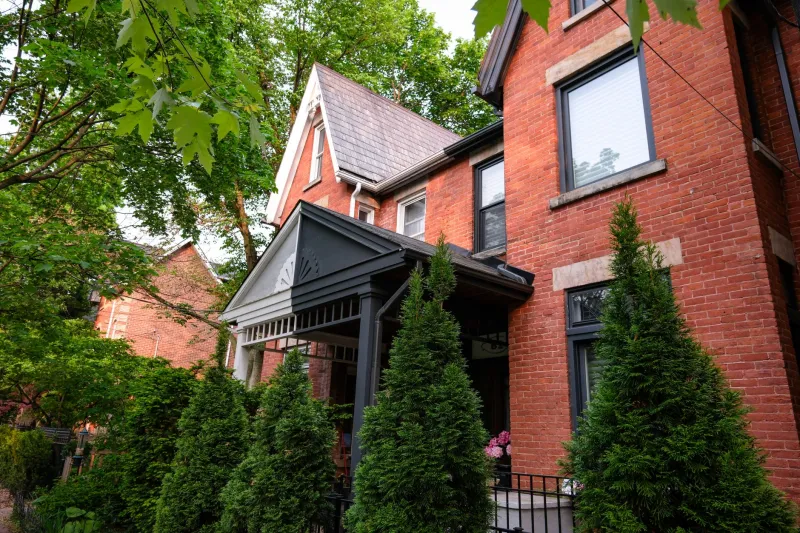
But in a walkable, mixed-use community like Front Street Village, your address is doing quiet professional work every single day — introducing you to people, putting you in rooms (and coffee shops, and sidewalks) where opportunities live, and giving you the kind of repeated, genuine contact that turns strangers into collaborators.
The next job lead, partnership, or client might not come from a job board or a cold email. It might come from the person who always orders right before you at the neighborhood café. You just have to live somewhere you'll actually run into them.