The Best Friendships Aren't Made on Apps — They're Made on the Walk to Get Coffee

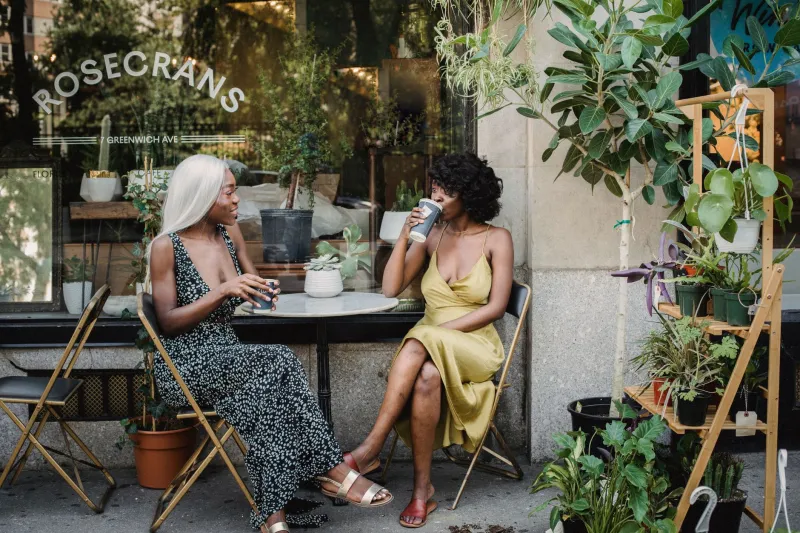
Some of the most meaningful relationships in your life will start with a chance encounter — a bumped shoulder at the farmers market, a shared bench during a rainstorm, a dog that refuses to walk past someone without saying hello. But those moments don't happen by accident. They happen by design.
There's a reason you keep downloading new social apps and still feel like something's missing. It's not you. It's your street.
The Science Behind the Stranger Who Becomes Your Friend
Sociologists have a term for the casual, low-stakes connections that pepper a healthy social life: weak ties. Coined by Stanford researcher Mark Granovetter back in the 1970s, the concept describes the acquaintances, neighbors, and familiar faces who sit somewhere between stranger and close friend. And it turns out, these relationships matter enormously — not just for your mood, but for your sense of belonging, your mental health, and even your career prospects.
The tricky part? Weak ties require repeated, unplanned exposure to the same people. You can't schedule them into a calendar. You can't manufacture them through a mutual follow. They grow slowly, in the margins of ordinary life — at the coffee counter, on the walking path, outside the dry cleaner.
The problem with most American suburbs is that they've quietly eliminated every space where those margins exist.
When you live in a neighborhood where every errand requires a car, every destination is separated by a parking lot, and your front door opens directly into a garage, the odds of bumping into the same person twice drop to almost zero. Life becomes a series of deliberate, scheduled interactions — and anything that requires effort tends to happen less often.
What Village Design Actually Does
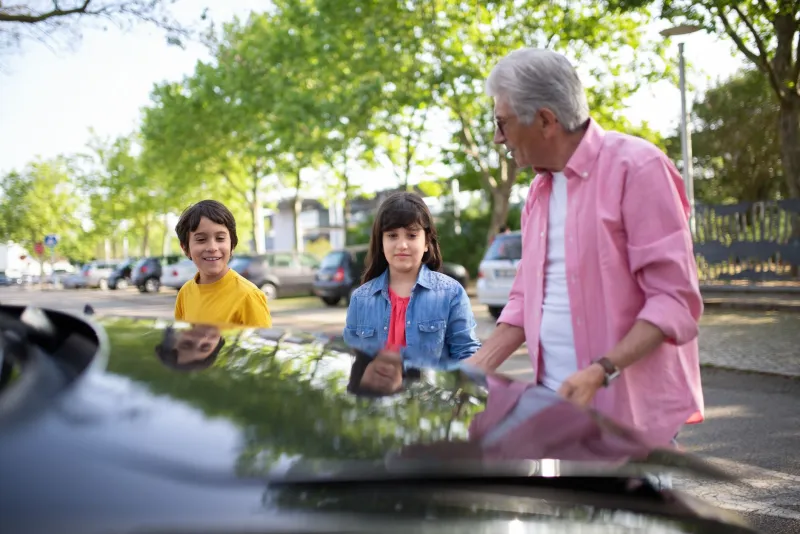
Mixed-use, pedestrian-centered neighborhoods operate on a completely different logic. When your morning coffee, your evening walk, your kid's school drop-off, and your weekend farmers market all happen within the same overlapping network of streets and sidewalks, you start seeing the same faces. Over and over again.
That repetition is the ingredient most people don't realize they're missing.
Researchers at the University of Chicago found that physical proximity — specifically, how often people share the same physical spaces — is one of the strongest predictors of friendship formation. Not shared interests. Not similar backgrounds. Proximity. Which means the layout of your neighborhood is quietly deciding who you'll know five years from now.
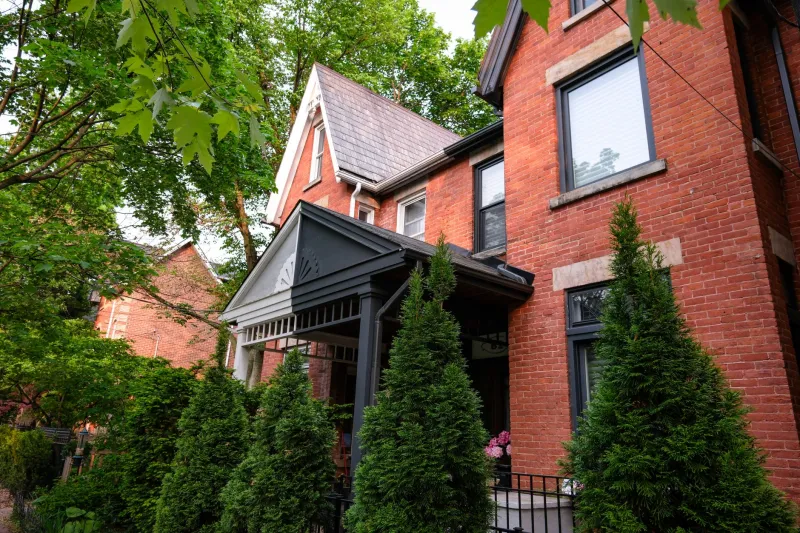
In a well-designed village community, the street itself becomes a kind of social infrastructure. Benches placed at natural gathering points, retail at eye level, walkways that funnel foot traffic through a shared plaza rather than around it — these aren't just aesthetic choices. They're the architecture of accidental connection.
Real Stories From the Sidewalk
Ask anyone who's lived in a walkable, mixed-use neighborhood long enough, and they'll have a version of the same story.
Take Marcus, a Front Street Village resident who moved here from a quiet cul-de-sac community in the outer suburbs. "I lived there for four years and knew maybe two neighbors by name," he says. "Here, I knew a dozen people within the first month. Not because I was trying — because I kept running into the same people at the same spots."
His closest friend in the neighborhood? Someone he first met in line at the bakery, then saw again at the weekend market, then ended up chatting with for forty-five minutes outside the hardware store. "If I'd been driving everywhere, that friendship never would have happened. You can't have a forty-five-minute conversation through a car window."
Or consider Diane, a retired teacher who moved to a walkable village community partly because she was worried about isolation after her kids moved out. "I thought I'd have to join clubs or sign up for things to meet people. But it just... happened. The connections came to me because I was outside, moving through the neighborhood, existing in the same spaces as everyone else."
These aren't outlier stories. They're what happens when a neighborhood is built to make human interaction the path of least resistance.
Why the Internet Can't Replace This
To be fair, online communities can be genuinely valuable. Neighborhood apps, local Facebook groups, community Slack channels — they all serve a purpose. But they work best as an amplifier of existing relationships, not a replacement for the physical conditions that create them.
Here's the fundamental problem with trying to replicate serendipity online: every interaction requires a decision. You have to open the app. You have to type something. You have to choose to engage. And human beings, being human, will often choose not to — especially when they're tired, distracted, or just not feeling it.
The sidewalk doesn't ask for your consent. It just puts you in the same place as someone else and lets nature take its course.
There's also something about the physicality of in-person, unplanned encounters that online interaction simply can't match. Eye contact, body language, the shared experience of existing in the same weather at the same moment — these are the cues our brains evolved to process as signals of trust and safety. A string of text messages, no matter how warm, doesn't fully activate the same neural pathways.
Designing for the Unexpected
What makes Front Street Village's approach interesting is that serendipity isn't left to chance — it's baked into the physical plan. Pedestrian routes are layered so that the path to the coffee shop overlaps with the path to the park, which overlaps with the route past the community garden. Gathering spaces are positioned at natural transition points, not tucked away as afterthoughts.
The result is a neighborhood where running into someone isn't a disruption to your day. It's just part of it.
That might sound like a small thing. But ask anyone who's spent years in a neighborhood where every interaction has to be planned, scheduled, and executed with effort — and then found themselves somewhere they could just walk outside and be among people — and they'll tell you it's one of the biggest quality-of-life differences they've ever experienced.
The Friendship You Didn't Know You Were Missing
Most of us have a pretty clear mental model of what we're looking for when we buy a home: square footage, school district, commute time, maybe a good backyard. What we don't usually put on the list is "a neighborhood where I'll accidentally meet my future best friend."
Maybe we should start.
Because the research is pretty consistent on this: people with more weak ties report higher levels of happiness, greater sense of purpose, and stronger feelings of community belonging. And those weak ties don't build themselves. They need the right conditions — the right streets, the right spaces, the right reasons to keep showing up in the same places.
Your next great friendship might be one walk away. But only if your neighborhood is designed to let it happen.