Alone at 70 MPH: The Quiet Toll Your Commute Is Taking on Your Social Life
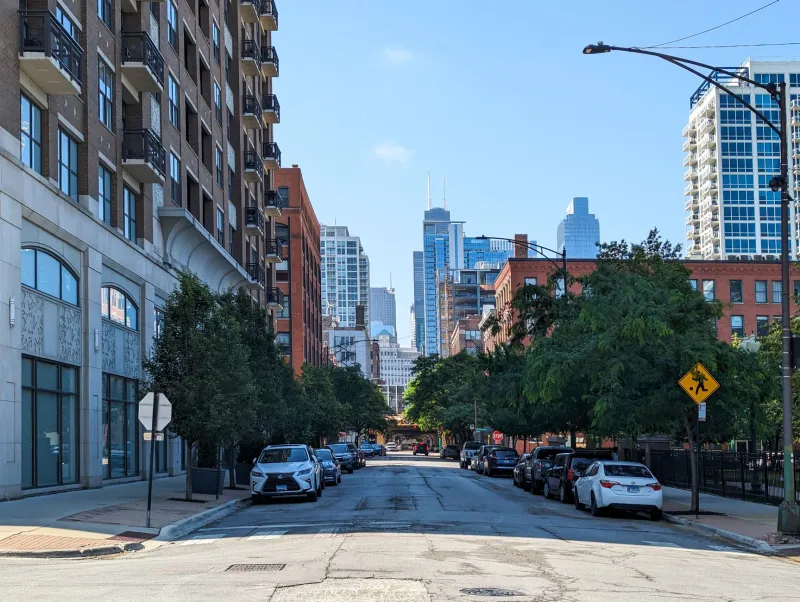
Let's be honest about what a commute actually is. It's not just travel time. It's a daily ritual of solitude—you, your car, a podcast you're only half-listening to, and a stretch of highway that looks exactly the same as it did yesterday. For millions of Americans, that ritual lasts 45 minutes each way. Some days longer. And while we've gotten pretty good at rationalizing it ("I get to decompress!"), researchers have spent the last decade quietly documenting what that time alone is actually costing us—not in gas money, but in something harder to replace.
Friendships. Community. The feeling that you actually belong somewhere.
What the Research Is Actually Saying
A landmark study out of the University of Sussex found that commuting is consistently ranked as one of the least enjoyable activities in people's daily lives—below work itself, and even below housework. But the more troubling finding isn't about mood. It's about what long commutes systematically crowd out.
Robert Putnam, the Harvard political scientist who wrote Bowling Alone, put a specific number on it back in 2000 that still holds up: every 10 minutes added to a commute reduces community involvement by roughly 10 percent. That means a 45-minute commute doesn't just tire you out. It statistically predicts that you're less likely to know your neighbors, attend local events, volunteer, or even have people over for dinner.
More recently, a Cigna study tracking loneliness in America found that nearly 61 percent of adults report feeling lonely—a number that's been rising steadily for years. Researchers point to a tangle of causes, but car-dependent suburban sprawl keeps showing up as a structural contributor. When your daily life is organized around a vehicle, spontaneous human contact—the kind that actually builds social bonds—almost disappears.
The Spontaneous Encounter Problem
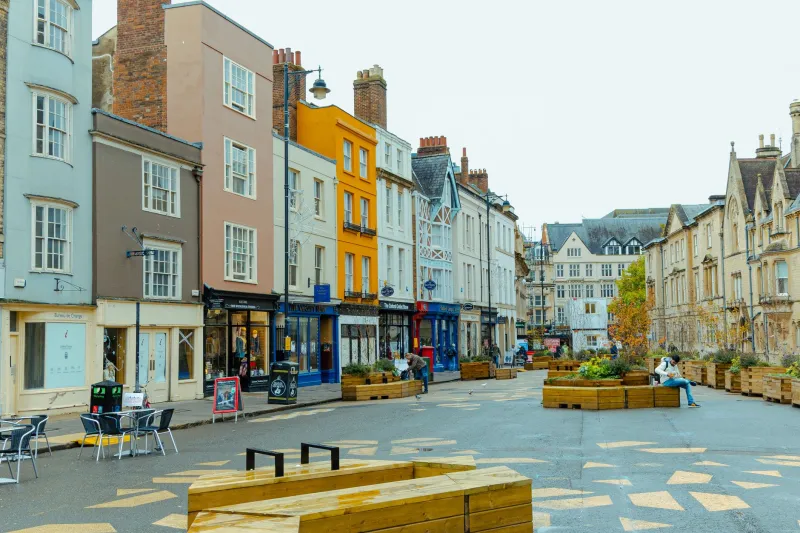
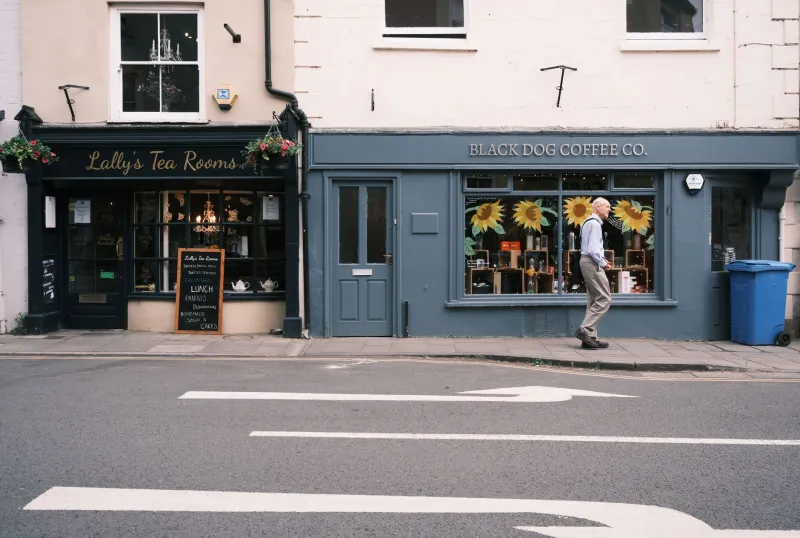
Here's something urban sociologists talk about that doesn't get enough airtime in real estate conversations: the value of what they call "third places." Not home, not work, but the coffee shop, the corner store, the park bench, the sidewalk. These in-between spaces are where casual acquaintanceships form, where you run into someone you haven't seen in a while, where the texture of community actually gets woven together.
Car-dependent living effectively eliminates third places. When you drive from your garage to a parking lot and back again, you never pass through the kind of shared space where those encounters happen. You might live three houses down from someone for five years and never have a real conversation with them—because there's simply no infrastructure for it.
This isn't a character flaw. It's a design problem.
When neighborhoods are built around the car first and the human second, isolation isn't a side effect. It's practically baked into the blueprint.
The Mental Health Layer Nobody Talks About
Isolation and mental health are deeply entangled, and the commute sits right in the middle of that relationship. Studies consistently link longer commutes with higher rates of anxiety, depression, and reported dissatisfaction with life—even after controlling for income, job type, and other variables. The effect is particularly pronounced for people who commute alone by car, compared to those who walk, bike, or use transit (where at least passive social exposure occurs).
There's also a time-displacement effect that's worth naming plainly. A 90-minute round-trip commute, five days a week, adds up to roughly 375 hours a year. That's more than nine full 40-hour work weeks. Time that isn't being spent at a kid's soccer game, a neighborhood block party, a slow Saturday morning at a local café, or just a walk around the block where you wave to someone you know. Those small moments aren't trivial. They're the actual connective tissue of a life that feels meaningful and rooted.
What a Different Kind of Place Can Do
This is where the conversation shifts from diagnosis to design—and it's the conversation that drives everything about what Front Street Village is trying to be.
A walkable, mixed-use neighborhood doesn't just save you time on your commute (though it does that too). It physically rebuilds the conditions for spontaneous social connection. When the coffee shop is three minutes on foot from your front door, you're not just getting coffee—you're passing neighbors, making eye contact, saying good morning to someone you've seen a dozen times before. Over weeks and months, those tiny interactions compound into something real: familiarity, trust, the low-key sense that you're part of something.
When errands happen on foot through shared streets rather than alone in a car, the community becomes a place you move through rather than a place you leave every morning and return to after dark. That distinction sounds small. It isn't.
Front Street Village's design philosophy is built around this idea at every level—walkable streetscapes, mixed-use retail and residential, common gathering spaces that aren't just decorative but genuinely functional. The goal isn't to manufacture community through forced programming. It's to create the physical conditions where community can actually grow on its own, the way it always has in neighborhoods people genuinely love.
The Commute You Don't Have to Take
None of this is an argument against ever leaving your neighborhood. People have jobs, families spread across cities, lives that extend well beyond any single zip code. But there's a meaningful difference between a life where the car is one option among many and a life where it's the only option for every single thing.
When your daily rhythm doesn't require a 45-minute solo drive just to access the basics—food, coffee, a walk, a conversation—you get those hours back. More importantly, you get those encounters back. The ones that don't show up on any productivity metric but quietly determine whether you feel connected to the place you live or just warehoused in it.
Loneliness in America isn't a personal failure. It's a design failure. And the good news is that design failures can be fixed—one walkable block, one front porch, one corner café at a time.
That's the bet Front Street Village is making. And the research suggests it's a pretty good one.