The Missing Piece in Most Neighborhoods: The Places That Make You Actually Want to Stay
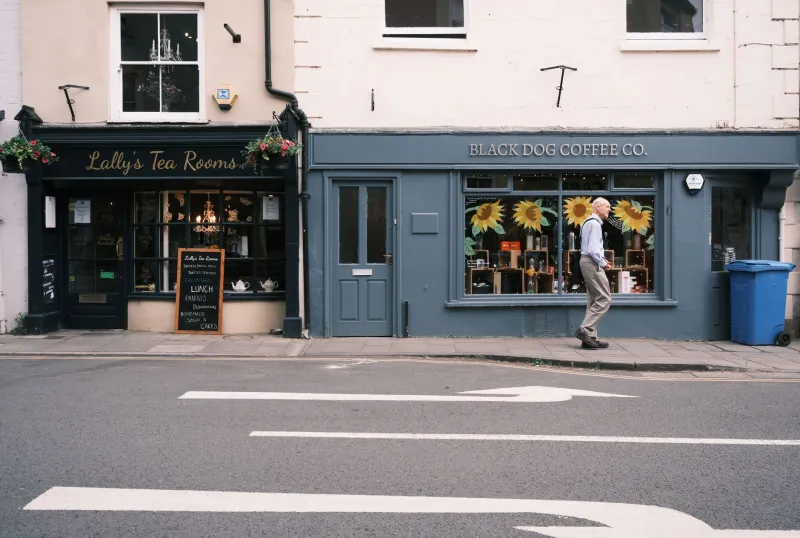
Think about the last time you felt genuinely connected to your neighborhood. Not just comfortable in your house, but actually rooted — like you belonged somewhere. Chances are, that feeling didn't come from your square footage or your stainless steel appliances. It probably came from somewhere in between. A coffee shop where the barista knows your order. A park bench where you ran into a neighbor and ended up talking for an hour. A corner bookstore that somehow always has exactly what you need.
Sociologists have a name for these spots. They call them third places — and they might be the single most important thing missing from the way most American neighborhoods are built today.
So What Exactly Is a Third Place?
The concept was introduced by urban sociologist Ray Oldenburg back in the late 1980s, and it's held up remarkably well. The idea is simple: your first place is home. Your second place is work. Everything else — the coffee shop, the neighborhood bar, the community garden, the local diner, the park where dogs run off-leash — that's your third place.
Third places are informal. They don't require a reservation or a reason to show up. They're the spots where you might go alone and leave knowing three more people than when you walked in. They're where casual acquaintances become actual friends, and where a collection of strangers slowly becomes something that feels like a community.
The problem? For decades, American suburban development has been quietly designing them out of existence.
The Suburb That Forgot to Leave Room for People
Post-war suburban planning had a clear priority: get people home safely and efficiently. Cul-de-sacs, wide arterial roads, separated-use zoning — it was all built around the car and the single-family house. And in many ways, it delivered on its promise. Backyards got bigger. Garages got deeper. Driveways got longer.
But somewhere in that equation, the spontaneous, unplanned social infrastructure got left out. When everything is designed around driving from Point A to Point B, there's no Point C — no in-between space where life actually happens.
The result shows up in the data. Studies on loneliness, social isolation, and mental health consistently find that residents of car-dependent, low-walkability neighborhoods report feeling less connected to their communities than people who live in places with accessible, mixed-use social spaces. A 2023 report from the U.S. Surgeon General identified social isolation as a public health crisis on par with smoking — and neighborhood design is increasingly recognized as a contributing factor.
This isn't about blaming the suburbs. It's about recognizing that the design of where we live has real consequences for how we feel.
What Intentional Design Actually Looks Like
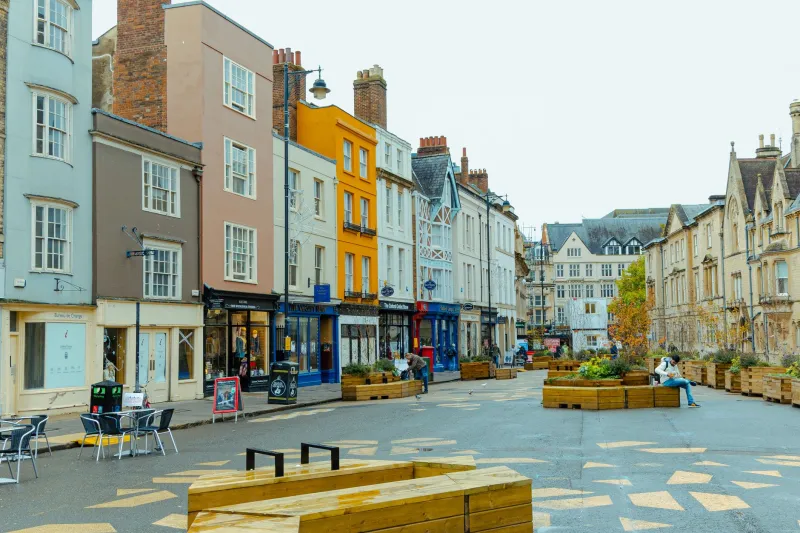
Communities built around the third-place philosophy look different from the inside out. Instead of separating residential from commercial, they weave them together. Instead of wide roads designed to move cars quickly, they have narrower streets designed to slow things down and make room for people.
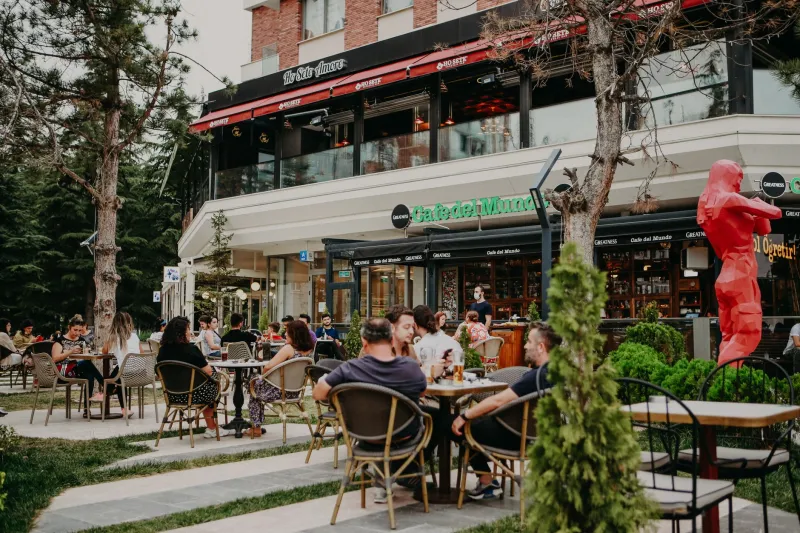
At Front Street Village, this shows up in the details. A café that spills onto a shaded courtyard. A community green that hosts a farmers market on Saturday mornings and a pickup soccer game on Sunday afternoons. Retail and restaurant spaces at street level, with homes and apartments above. A library nook. A dog park. A spot where kids can just be without it being a scheduled activity.
None of these things happen by accident. They're the result of asking a different question during the planning process — not just where will people sleep? but where will people actually live?
The Measurable Impact on Residents
This isn't just feel-good urban planning theory. The research behind third places and community design is genuinely compelling.
A study published in the journal Environment and Behavior found that residents of walkable, mixed-use neighborhoods had significantly higher rates of social interaction with neighbors compared to those in conventional suburban developments — and that those interactions correlated directly with reported well-being and life satisfaction.
Separate research from the American Journal of Preventive Medicine found that people who live within walking distance of parks, cafés, and community spaces are more physically active, report lower rates of depression, and feel a stronger sense of belonging to their community.
And then there's the housing satisfaction piece, which is maybe the most interesting angle for anyone thinking about where to put down roots. Homeowners in neighborhoods with strong third-place infrastructure consistently rate their satisfaction with their home higher — even when the home itself is smaller or less feature-rich than comparable properties in more isolated settings. Turns out, when you love where you live, you love your house more too.
The Difference Between Amenities and Third Places
It's worth drawing a distinction here, because these two things often get conflated in real estate marketing. Amenities — a fitness center, a pool, a dog-washing station — are features you use. Third places are spaces you inhabit. The difference is subtle but important.
An amenity serves a function. A third place creates a context. One gets you in and out efficiently. The other gives you a reason to linger, to bump into someone, to stay longer than you planned.
The best communities offer both — but they understand that no amount of premium amenities can substitute for the organic, unscripted social energy that a great third place generates. A rooftop deck with a view is lovely. A neighborhood coffee shop where you recognize half the faces on a Tuesday morning? That's irreplaceable.
Why This Should Change What You Look For in a Home
If you're in the process of figuring out where to live — or where to invest — it's worth adding third places to your checklist. Not just is there a coffee shop nearby? but is there a coffee shop I'd actually want to hang around in? Not just is there a park? but does it feel like a place where people actually gather?
Walk the neighborhood at different times of day. Notice whether people are sitting outside, talking to each other, letting their kids play without hovering anxiously. Look for the spots that seem to have a gravitational pull — the places where life seems to collect.
That's the real signal. Not the granite countertops. Not the HOA amenity package. The question is whether the neighborhood has places that make people want to show up — and stay.
Because at the end of the day, a house is just four walls. What makes it a home is everything that surrounds it.