Your Zip Code Is a Financial Decision: The Real Math Behind Living Close to Everything
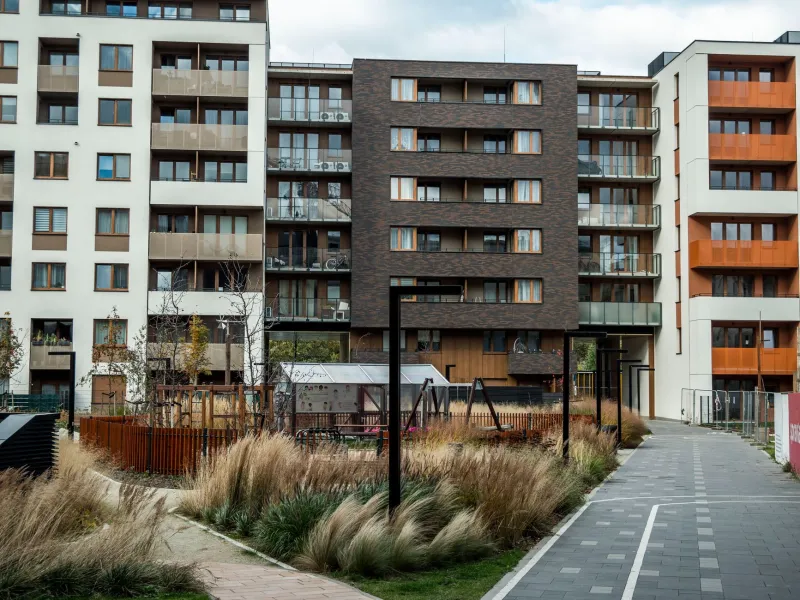
When people sit down to figure out what they can afford, they usually start with the mortgage calculator. Monthly payment, interest rate, down payment—the usual suspects. What almost nobody puts in that spreadsheet is the stuff that doesn't show up on a loan document but absolutely shows up in your bank account: the cost of distance.
Where you live relative to where you need to be isn't just a convenience question. It's an economics question. And once you start running the actual numbers, the case for mixed-use village living stops being about preference and starts being about dollars.
The Commute Tax Nobody Warned You About
Let's start with the obvious one. The average American commuter spends roughly 27 minutes each way getting to work—and that's the national average, which means plenty of people are well above it. At an hour a day, five days a week, that's 250 hours a year. If you value your time at even $20 an hour (a conservative figure for most working adults), you're looking at $5,000 in time costs annually. That's before you factor in gas, parking, vehicle wear, or the very real toll that long commutes take on mental health and productivity.
AAA estimates that the average cost of owning and operating a vehicle in the US runs around $10,700 per year. Households that can drop from two cars to one—something that becomes genuinely realistic when daily errands and even work are within walking or biking distance—immediately free up over $10,000 annually. Over a 30-year mortgage period, that's more than $300,000 in transportation savings, even without accounting for investment growth.
That's not a rounding error. That's a college education.
The Childcare Logistics Problem
Here's one that doesn't get nearly enough attention: the hidden cost of childcare logistics. It's not just the tuition—it's the time and money spent getting kids where they need to go. When school, aftercare, activities, and pediatric care are scattered across a sprawling suburb, parents essentially become unpaid logistics coordinators. That coordination has real financial consequences.
Studies have found that parents—and disproportionately mothers—reduce working hours or turn down career opportunities specifically because of childcare pickup and dropoff constraints. When those services exist within walking distance or a short stroll through a connected neighborhood, the calculus changes. Parents gain back time. Career flexibility improves. And the secondary income that might have been sacrificed stays in the household.
In communities where a pediatrician, a daycare center, and a school are all within a few blocks, that's not just convenient—it's economically transformative for working families.
Healthcare Access Is a Wealth Issue
This one tends to surprise people. Most Americans don't think of healthcare proximity as a financial variable, but the data tells a different story. Delayed care is expensive care. When a primary care physician or urgent care clinic is far away—or when getting there requires taking half a day off work—people put off appointments. Minor issues become major ones. Preventive care gets skipped.
The Urban Institute and other research organizations have documented that communities with better access to healthcare services see measurably lower emergency room utilization, which is consistently the most expensive form of medical care available. Living somewhere that makes routine healthcare easy to access isn't a luxury—it's a hedge against catastrophic medical bills.
A mixed-use village model that integrates healthcare services into the neighborhood fabric isn't just thoughtful planning. It's quietly saving residents money they'll never see itemized anywhere.
Entertainment and the Leakage Problem
Here's a more cheerful cost to consider: fun. Specifically, how much it costs to have any when everything is far away.
In a conventional suburban setup, going out requires planning—a car, a driver, sometimes a babysitter, parking fees, and a commitment of time that makes spontaneous socializing nearly impossible. The result? People go out less, but when they do, they spend more to make the trip feel worthwhile. Economists sometimes call this "leakage"—money that flows out of a community because local options don't exist.
In a walkable village setting, the dynamics flip. When restaurants, coffee shops, fitness studios, and entertainment venues are steps from your front door, social life becomes casual and frequent rather than planned and expensive. Residents of walkable urban neighborhoods consistently report spending less per social outing because the bar for going out is lower. You don't need a special occasion to walk downstairs for dinner.
That shift—from expensive, infrequent outings to affordable, regular ones—adds up to meaningful savings over time while actually improving quality of life.
Property Values: The Proximity Premium
It would be incomplete to talk about the economics of proximity without mentioning what it does to home values. Walkable properties in mixed-use communities have consistently outperformed car-dependent suburban counterparts in resale value, particularly over the last decade.
Walk Score, a measure of neighborhood walkability, has been correlated in multiple studies with higher property values—sometimes significantly so. A 2023 analysis found that homes in the most walkable neighborhoods commanded a premium of 20-30% over comparable homes in car-dependent areas in many US metros. That premium tends to hold even during market downturns, partly because demand for walkable housing consistently outstrips supply.
Buying into a walkable village community isn't just saving you money today—it's positioning your asset to appreciate more reliably over time.
Putting It All Together
Here's a rough sketch of what the annual financial advantage of proximity can look like for a typical American household:
- Transportation savings (one fewer car): $10,000+
- Time savings (converted to productive or leisure hours): $3,000–$6,000 equivalent
- Reduced childcare logistics costs: $2,000–$5,000
- Lower healthcare utilization through easier preventive access: $500–$2,000
- Entertainment and dining efficiency: $1,000–$3,000
Conservatively, that's $15,000 to $25,000 per year in combined savings and value—without touching the mortgage.
Most people spend weeks agonizing over whether to lock in a 6.5% or 6.75% interest rate. That difference on a $400,000 loan is roughly $600 a year. The zip code decision? That's potentially 25 times more impactful.
The Bottom Line
At Front Street Village, we talk a lot about community because that genuinely matters to us. But we also want to be honest with the people considering making this their home: the numbers work. Living close to what you need isn't a trade-off or a compromise. It's a strategy—one that reduces hidden costs, builds equity more reliably, and gives you back something that no square footage can replace: time.
The best financial decision most homebuyers will ever make might just be the one they're currently treating as a lifestyle question.