The Hangout Gap: What Your Neighborhood Is Missing Between Your Front Door and Your Office
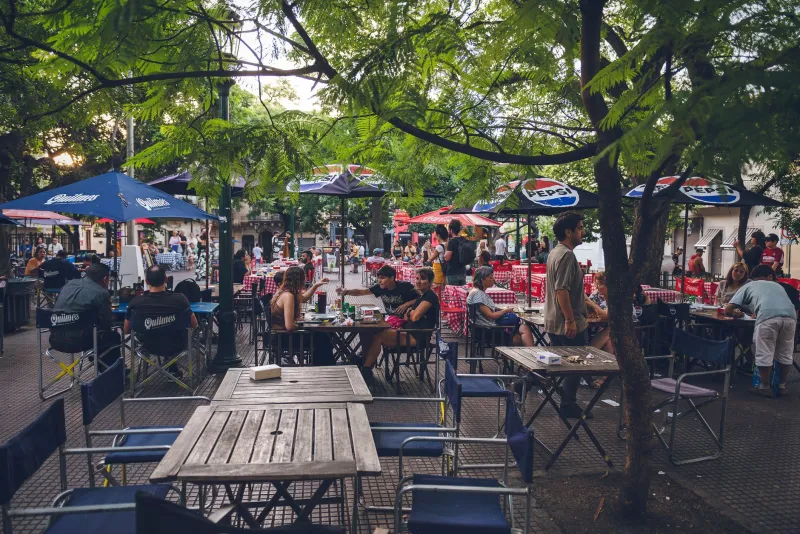
Think about the last time you ran into someone you knew — not because you planned it, but just because you were both there. Maybe it was at a coffee shop, a farmers market, a park bench, or the counter of a neighborhood diner. You talked for ten minutes, laughed a little, and went on with your day feeling oddly better than before.
That wasn't an accident. That was a third place doing exactly what it's supposed to do.
The term was coined back in the 1980s by sociologist Ray Oldenburg, who argued that healthy communities depend on three distinct settings: home (the first place), work (the second place), and a third category of informal, accessible gathering spots where people come and go freely, without agendas or admission fees. Think barbershops, corner cafes, public squares, libraries, and local pubs. The kinds of places where regulars are recognized and strangers become familiar faces.
For much of American history, those places were woven into the fabric of everyday life. Then came the postwar suburb, the interstate highway, the strip mall, and the drive-through — and quietly, almost without noticing, we engineered them out of existence.
What Sprawl Did to Our Social Lives
Modern suburban development was built on a simple premise: separate everything. Homes go here, offices go there, shopping goes somewhere else entirely, and you connect the dots with a car. It was efficient in theory. In practice, it hollowed out something essential.
When every trip requires a vehicle and every destination is purpose-built for a single function, spontaneous human interaction becomes nearly impossible. You don't bump into your neighbor at the corner store if there is no corner store. You don't linger at the park if the park is a ten-minute drive away and parking costs four dollars.
The consequences aren't just inconvenient — they're measurable. A 2023 report from the U.S. Surgeon General flagged loneliness as a full-blown public health epidemic, noting that roughly half of American adults report significant feelings of isolation. Studies consistently link that isolation to higher rates of depression, anxiety, cardiovascular disease, and even early mortality. The research on social connection and health outcomes is, at this point, overwhelming.
And yet most neighborhood development continues to be designed around the assumption that community will somehow just... happen.
It doesn't. Not without the right infrastructure.
The Anatomy of a Good Third Place
So what actually makes a third place work? Oldenburg identified a few key qualities that hold up remarkably well today.
Accessibility and proximity. A gathering spot only functions if people can reach it without much effort. That means walkable distance from homes, not a highway exit ramp away. The friction of getting there has to be low enough that stopping in feels natural rather than like a planned outing.
A welcoming, neutral atmosphere. Third places work because they belong to everyone and no one in particular. They're not exclusive. You don't need an invitation or a membership. You can show up alone and leave feeling less alone.
A mix of regulars and newcomers. The social magic of a good third place comes from its layered cast of characters — the morning coffee crowd who know each other by name, the occasional visitor passing through, the remote worker who camps out for a few hours. That mix creates an ongoing, low-stakes social fabric.
The option to linger. This one's underrated. Third places aren't transactional. You're not expected to order and leave. There's room to stay, to chat, to watch the world go by. That unhurried quality is precisely what makes genuine connection possible.
Why Mixed-Use Villages Get This Right
The resurgence of mixed-use, walkable community design isn't just an aesthetic trend. It's a direct response to the third-place deficit that sprawl created.
When a neighborhood is intentionally designed to blend residential, retail, and public space — when the coffee shop is a four-minute walk from your front door, when the plaza is built for sitting rather than just passing through, when the park connects to the main street rather than hiding behind a parking lot — third places don't just exist. They thrive.
At Front Street Village, that philosophy is baked into the bones of the community. The idea isn't simply to add amenities as an afterthought, but to design the entire neighborhood around the reality that people need places to be together, not just to live near each other. A well-placed café on a corner, a shaded public square with seating, a community green that hosts weekend markets — these aren't luxury additions. They're the connective tissue of a functioning neighborhood.
Research backs this up. A study published in the Journal of Urban Design found that residents of walkable, mixed-use neighborhoods reported significantly higher levels of social trust and community belonging than those in conventional suburban layouts. When the built environment makes casual interaction easy, people interact more casually. Simple as that.
The Ripple Effects You Might Not Expect
Here's what's interesting: the benefits of third places extend well beyond the obvious social ones.
Neighborhoods with active, well-used public gathering spaces tend to have lower crime rates — not because of increased surveillance, but because of what urbanists call "eyes on the street." When people are out and about, when spaces feel alive and inhabited, they also feel safer.
Local businesses in walkable village settings benefit too. The foot traffic that flows naturally through a community with good third places supports independent shops and restaurants in ways that car-dependent strip malls simply can't replicate. That, in turn, creates more character, more variety, and more reasons to stay local.
And then there's the mental health dimension that often goes unmentioned in real estate conversations. Having a place to go — a familiar spot where you're likely to see a friendly face, where you can decompress outside your own four walls without spending much money or making a big plan — is genuinely good for your brain. Psychologists call it ambient belonging: the sense that you're part of something, even when you're just grabbing a coffee.
What to Look for When You're Shopping for a Neighborhood
If you're in the market for a new home, it's worth asking some questions that most buyers don't think to ask.
Can you walk to a coffee shop or a park from the front door? Is there a public plaza, a community green, or a gathering space that isn't just a parking lot with some shrubs? Does the neighborhood have a main street — a real one, with ground-floor retail and pedestrian activity — or is everything accessed by car?
These aren't trivial questions. They're questions about whether the place you're considering will actually support the kind of life you want to live. A beautiful house in the wrong neighborhood can still leave you feeling strangely empty. A well-designed community with genuine third places can make even a modest home feel rich.
The hangout gap is real. But it's also fixable — and more and more communities are figuring out how to fix it. The question is whether yours is one of them.