How the Street Outside Your Door Is Teaching Your Kids to Be Human
Every few years, a new study drops and parents collectively panic about screens. Too much YouTube. Too much Minecraft. Not enough eye contact. And sure, there's real research worth paying attention to there. But developmental psychologists have been quietly pointing to something else for decades — something that's hiding in plain sight at the end of your driveway.
The way your neighborhood is physically built might matter more for your child's social development than how many hours they spend on an iPad.
That's not a hot take. That's increasingly what the research shows.
The Science of Unstructured Play (and Why It's Disappearing)
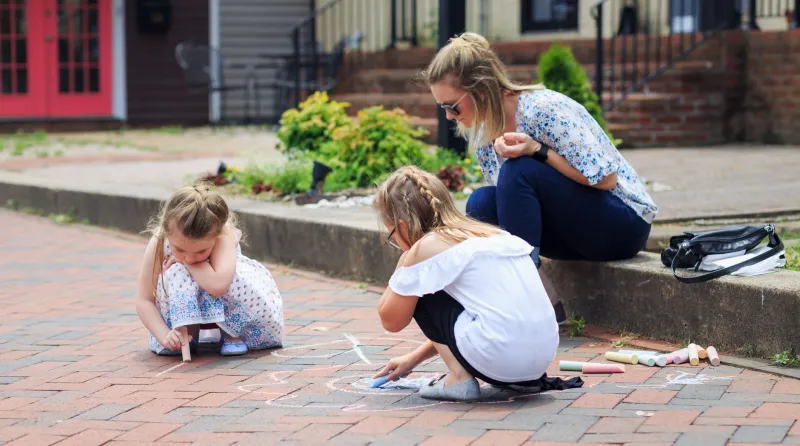
Back in the 1970s and '80s, kids largely raised each other. Not because parents were negligent — but because neighborhoods were built in a way that made it natural. Kids wandered. They showed up at each other's houses. They negotiated who got to be the pitcher, who had to play outfield, and what happened when someone broke the rules. Nobody's mom was refereeing.
That kind of unstructured peer interaction is, according to child development experts, absolutely essential. Dr. Peter Gray, a research professor at Boston College and author of Free to Learn, has spent years documenting how self-directed play builds the social and emotional muscles kids need to function as adults — things like conflict resolution, empathy, reading social cues, and tolerating frustration.
The problem? That kind of play requires a specific ingredient that's become increasingly rare: a place to actually do it.
When neighborhoods are designed around cars rather than people — long cul-de-sacs, no sidewalks, houses set far back from the street, no central gathering spaces — kids don't naturally encounter each other. There's nowhere to drift toward. No corner to hang out on. No park within walking distance. So they go inside. And yes, they pick up a screen.
The screen isn't always the root cause. Sometimes it's just the only option available.
What Walkable Neighborhoods Actually Do for Kids
Compare that to a mixed-use village layout — the kind of design that Front Street Village is built around — where sidewalks connect homes to parks, open greens, and neighborhood gathering spots. Where a kid can actually walk somewhere without a parent buckling them into a car.
Research published in the American Journal of Preventive Medicine found that children in walkable neighborhoods spend significantly more time in outdoor, active play than those in car-dependent suburbs. And more outdoor play time correlates strongly with better social outcomes — not just physical health.
When kids have access to shared spaces they can reach independently, a few important things happen:
They encounter other kids organically. Not at a scheduled playdate, not on a team with a coach running drills — just randomly, the way real social life actually works. That randomness is where a lot of the developmental magic happens.
They have to figure things out without adult intervention. Who goes first. What the rules are. What to do when someone gets their feelings hurt. These micro-negotiations, repeated hundreds of times over childhood, are how social competence gets built.
They develop a sense of independence and belonging. Researchers call it "place attachment" — a child's feeling of connection to their physical environment. Kids who can explore their neighborhood freely tend to develop stronger senses of identity and community than those whose world is mostly defined by the inside of a car and a backyard.
The Cul-de-Sac Problem Nobody Talks About
Cul-de-sacs get marketed as a family-friendly perk. Quiet street, low traffic, safe for kids. And on the surface, that makes sense. But urban planners and child development researchers have started pushing back on that assumption.
The issue is isolation. A cul-de-sac is a dead end — by design. It connects to nothing. Kids who live on one don't have anywhere to walk to. The social world of a cul-de-sac kid is largely limited to whoever happens to live on the same loop. If those neighbors don't have kids the same age, or if those kids aren't outside, the street is just... quiet.
Contrast that with a neighborhood built around a connected street grid, a central green, a playground that draws kids from multiple blocks. Suddenly the social pool is bigger, the opportunities for spontaneous interaction multiply, and kids are practicing the skills they need — with a much wider cast of characters.
What Parents Can Actually Do About It
Here's the honest part: if you're already living in a suburban neighborhood without much walkability, this article isn't meant to make you feel bad. Plenty of kids grow up in car-dependent areas and turn out wonderfully. Parenting, family culture, schools, and a hundred other factors all matter too.
But if you're in the process of choosing where to live — or if you're weighing a move — neighborhood design is worth putting on the checklist alongside square footage and school ratings.
Ask yourself:
- Can my kid walk to a park or open space without me driving them?
- Are there sidewalks that connect to other parts of the neighborhood?
- Is there a central gathering spot where kids (and adults) actually congregate?
- Do the streets feel safe and human-scaled, or are they built for cars moving fast?
These aren't just quality-of-life questions for adults. They're questions about the kind of childhood your kids will actually have.
Front Street Living and the Case for Connected Communities
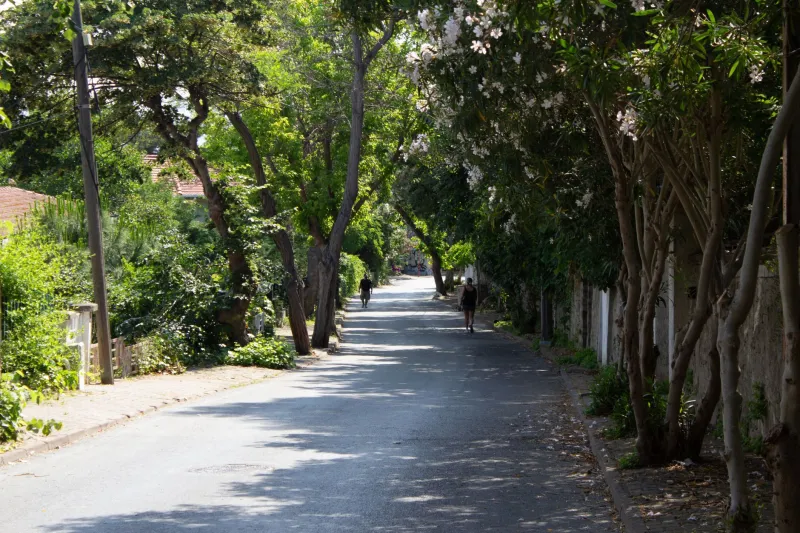
At Front Street Village, the whole philosophy starts with connection — not just between buildings, but between people. Tree-lined pedestrian paths, neighborhood parks within easy reach, open common areas that invite lingering. These aren't just aesthetic choices. They're the physical infrastructure that makes community actually happen.
For families, that infrastructure has real stakes. When a child can walk out the front door and find other kids, find a place to play, find a world that extends beyond the living room — that's not a small thing. That's the stuff childhood memories are made of. And increasingly, it's the stuff that developmental science says actually shapes who your kids become.
Screens aren't going anywhere. But neither is the research showing that the built environment matters. Maybe it's time we started treating neighborhood design like the parenting decision it actually is.