Why Having a Great Home Isn't Enough: The Hidden Ingredient Missing From Most Neighborhoods
You finally got the house. The granite counters, the backyard, the two-car garage. Maybe you even scored a great school district. By every traditional measure, you've made it.
So why does it still feel like something's missing?
If you've ever moved into a neighborhood that looked perfect on paper but never quite felt like home, there's a good chance the problem wasn't your house at all. It was everything around it — or more accurately, the lack of it.
Sociologists have been studying this gap for decades, and they've given it a name: the disappearance of the third place.
What Is a Third Place, Exactly?
Back in 1989, urban sociologist Ray Oldenburg coined the term in his book The Great Good Place. The idea is straightforward: your first place is home. Your second place is work. Your third place is everywhere else — the coffee shop where the barista knows your order, the corner bar where you end up staying two hours longer than planned, the park bench where you run into your neighbor and actually stop to talk.
Third places aren't fancy. They're not destinations you have to plan for. They're the informal, low-stakes gathering spots that exist between the obligations of your day — places where you can just be around other people without an agenda.
The local diner. The barbershop. The town square. The public library steps. For most of American history, these spaces were woven into the fabric of daily life without anyone having to think much about them.
Then came the postwar suburban boom, the rise of the car, the strip mall, the cul-de-sac — and slowly, quietly, the third place started disappearing.
The Loneliness Epidemic Nobody Wanted to Talk About
Here's a stat that tends to stop people cold: in 2023, the U.S. Surgeon General issued an advisory declaring loneliness a public health crisis. Not a social inconvenience. A crisis — one with health consequences comparable to smoking 15 cigarettes a day.
That's not a technology problem or a social media problem, though those things don't help. It's largely a design problem. We built communities around the assumption that people would drive everywhere, keep their lives compartmentalized, and find connection through scheduled events rather than spontaneous encounters.
And it hasn't worked out great.
When your neighborhood has no place to just show up — no coffee shop within walking distance, no plaza where people actually linger, no corner where you're likely to bump into someone you know — the default becomes isolation. You go home, you close the garage door, and you wonder why you feel disconnected even though you're technically surrounded by neighbors.
The Spontaneous Encounter Problem
Here's what makes third places so irreplaceable: they generate what researchers call weak ties — the casual, low-intensity relationships with acquaintances, regulars, and neighbors that actually do a surprising amount of emotional heavy lifting.
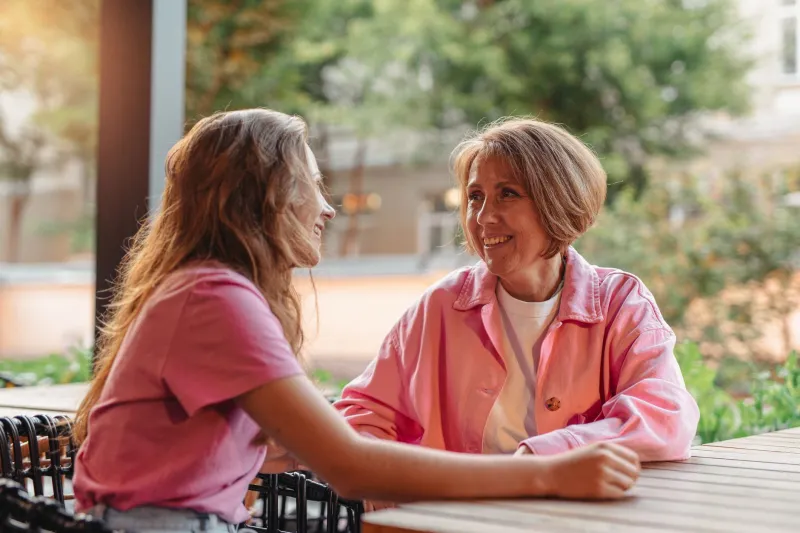
Your close friends are important, obviously. But it's the guy at the coffee counter who asks how your weekend was, the woman from three streets over you see every Saturday at the farmers market, the group of retirees who've claimed the same corner of the park every morning — those interactions are doing more for your sense of belonging than most people realize.
Weak ties make you feel like you're part of something. They give you a sense of place, of mattering to a community in small but meaningful ways. And you can't manufacture them through scheduling. They have to happen organically — which means the physical environment has to allow for them.
No third place, no organic encounters. No organic encounters, no weak ties. No weak ties, and even a neighborhood full of genuinely nice people can feel strangely hollow.
What Thoughtful Community Design Actually Looks Like
This is where the conversation gets interesting — and honestly, hopeful.
Mixed-use village communities, built around walkability and shared public space, are essentially third-place machines. Not by accident. The best-designed ones are deliberately engineered around the understanding that a neighborhood's value isn't just measured in square footage — it's measured in the quality of life that happens between the homes.
Think about what that looks like in practice:
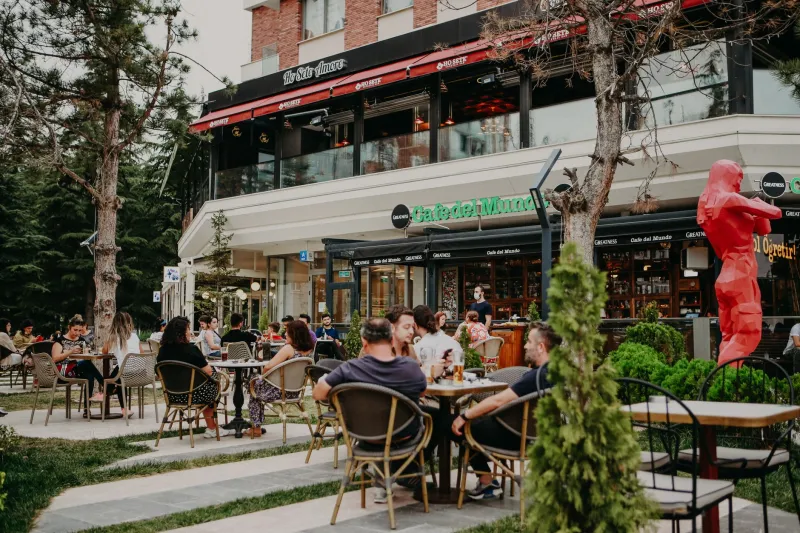
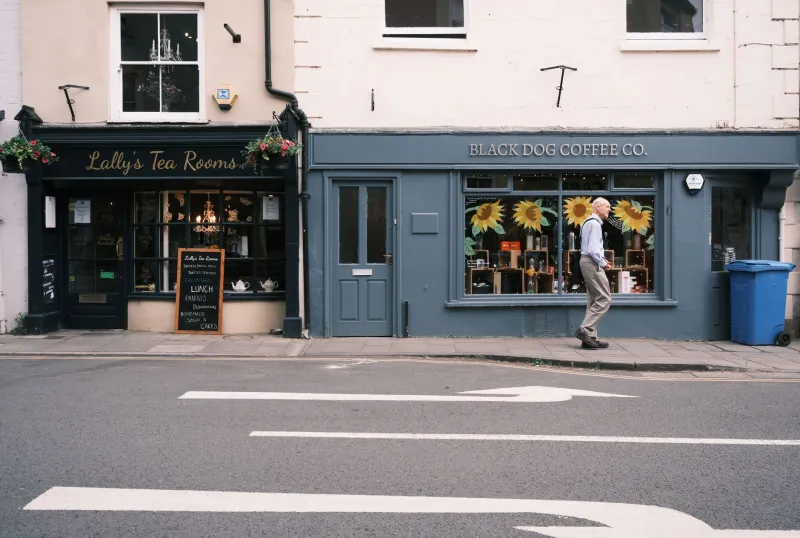
The coffee shop at the corner. Not a drive-through. An actual sit-down spot where you might run into your neighbor on a Tuesday morning and end up talking for twenty minutes about nothing in particular. That's a third place.
The village green or central plaza. A space designed not for any single purpose but for gathering — weekend markets, food trucks, kids running around, people watching from a bench. When it's well-designed, people don't need a reason to be there. They just end up there.
The neighborhood market or general store. The kind of place where you pop in for one thing and leave having had three conversations. These spaces create the rhythmic, repeated encounters that build familiarity over time.
The trail that actually goes somewhere. Not just a loop around a retention pond, but a path that connects homes to shops, parks to plazas, so that the act of getting from point A to point B becomes a social experience rather than a private one.
None of this is accidental. It requires intentional planning — streets designed for pedestrians, not just cars; buildings placed close to sidewalks so the transition between public and private feels natural; mixed uses that bring different kinds of people out at different times of day, keeping the community alive around the clock.
The Ripple Effect on Mental Health and Belonging
The research on what happens when people have access to quality third places is pretty striking.
Studies consistently show that residents of walkable, mixed-use neighborhoods report higher levels of social trust — that baseline sense that your neighbors are generally decent people who've got your back. They report lower rates of depression and anxiety. They feel more rooted, more invested in their community, more likely to stay long-term.
That last point matters a lot. One of the underappreciated costs of disconnected suburban design is churn — people who never quite feel at home, who move again in a few years, who never build the kind of lasting community ties that make a neighborhood feel like a real place with a real identity.
When people have genuine reasons to be out and about — when the third places are there — they stay. And the longer they stay, the richer the community becomes.
It's Not About Nostalgia
It's tempting to frame this as a longing for some idealized small-town past that may or may not have existed the way we imagine it. But that's not really the point.
The point is that human beings are wired for community. We need regular, low-stakes contact with other people. We need places that belong to everyone and no one in particular. We need the texture of daily life that comes from a neighborhood that's actually alive.
A beautiful home in a disconnected neighborhood can give you shelter, privacy, and comfort. Those things matter. But a home embedded in a community with real gathering spaces, real walkability, and real shared life? That gives you something harder to quantify — and much harder to leave.
At Front Street Village, that's the idea at the center of everything: that where community comes home isn't just a tagline. It's a design philosophy. The third place isn't a luxury add-on. It's the whole point.