Your Doctor Might Recommend Moving Here: The Science Linking Neighborhood Design to Better Health

When most people think about getting healthier, they picture a gym membership, a salad, maybe a new pair of running shoes. Rarely does anyone think about their zip code. But a growing body of peer-reviewed research is making a compelling case that the physical layout of your neighborhood — the streets, the sidewalks, the coffee shops, the proximity to actual human beings — may be one of the most powerful predictors of your overall wellness.
Not slightly influential. Significantly influential. The kind of influential that's showing up in cardiology journals and public health policy papers alike.
So what exactly is going on? And why does it matter for the way communities like Front Street Village are being designed today?
The Walkability-Wellness Connection Is Real
Let's start with the basics. Researchers have consistently found that people living in walkable neighborhoods — places where errands, dining, parks, and social spaces are accessible on foot — log substantially more daily physical activity than their car-dependent counterparts. And we're not talking about people who are already fitness-minded. We're talking about ordinary folks going about their ordinary days.
A landmark study published in the American Journal of Preventive Medicine found that residents of highly walkable neighborhoods were significantly less likely to be overweight or obese compared to those living in sprawling, auto-dependent suburbs. The reason isn't complicated: when your neighborhood is designed for walking, you walk. When you have to drive to do literally anything, you don't.
The Centers for Disease Control and Prevention have pointed to built environment design as a key upstream factor in the obesity epidemic. In other words, it's not just willpower. It's infrastructure.
Stress, Anxiety, and the Street You Live On
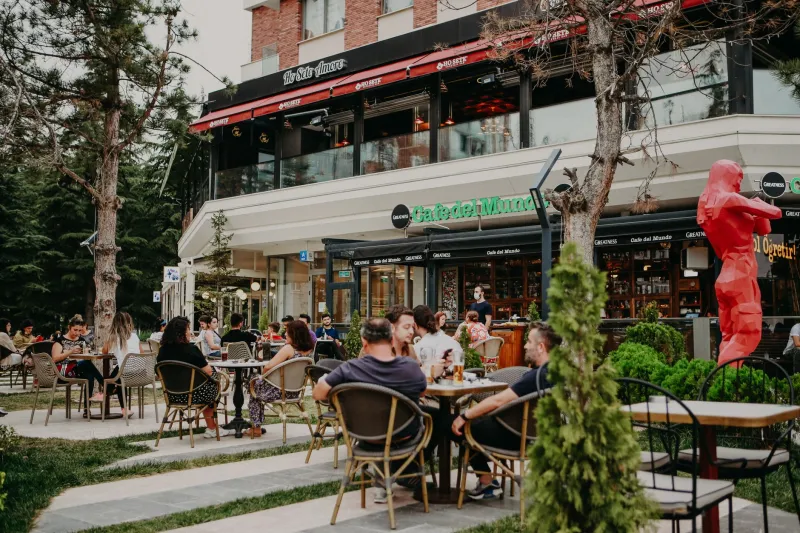
Here's where things get really interesting. The health benefits of connected neighborhoods go well beyond the physical. Mental health researchers have been quietly documenting something remarkable: people who live in communities where they regularly encounter neighbors, patronize local businesses, and spend time in what sociologists call "third places" — spots that aren't home and aren't work — report measurably lower levels of stress and anxiety.
A study out of the University of Wisconsin found that residents with stronger neighborhood social ties had better mental health outcomes across nearly every metric tested. Separate research from the United Kingdom's National Health Service — increasingly referenced by American public health officials — concluded that social isolation carries health risks comparable to smoking 15 cigarettes a day.
Fifteen cigarettes. A day.
The mechanism makes intuitive sense once you hear it. When you're embedded in a real community — when you recognize faces at the corner café, when your neighbor waves from the porch, when you run into someone you know while picking up groceries — your nervous system registers safety and belonging. Cortisol levels drop. Anxiety quiets. Your body stops being in low-grade fight-or-flight mode.
Contrast that with the experience of pulling into a garage, closing the door behind you, and not encountering another human being until you do it all again tomorrow morning. That kind of isolation isn't neutral. It's a chronic stressor, and your body keeps score.
Longevity Isn't Just Luck
If the stress and obesity data didn't get your attention, maybe this will: researchers studying longevity have found that social connectedness is one of the strongest predictors of a long life — stronger, in some analyses, than exercise habits, diet, or even genetics.
The Harvard Study of Adult Development, one of the longest-running studies on human happiness and health ever conducted, concluded after decades of research that close relationships and community connection keep people happier and healthier longer than money or fame ever could. The people who stayed most connected to others showed slower cognitive decline, fewer chronic illnesses, and lived measurably longer.
Walkable, mixed-use neighborhoods don't manufacture friendships out of thin air. But they create the conditions where friendships can actually form — and where existing ones can be maintained with far less effort. When your friend lives three blocks away instead of 40 minutes across town, you actually see them. Spontaneously. Regularly. That regularity is the secret ingredient.
What "Third Places" Do for Your Brain
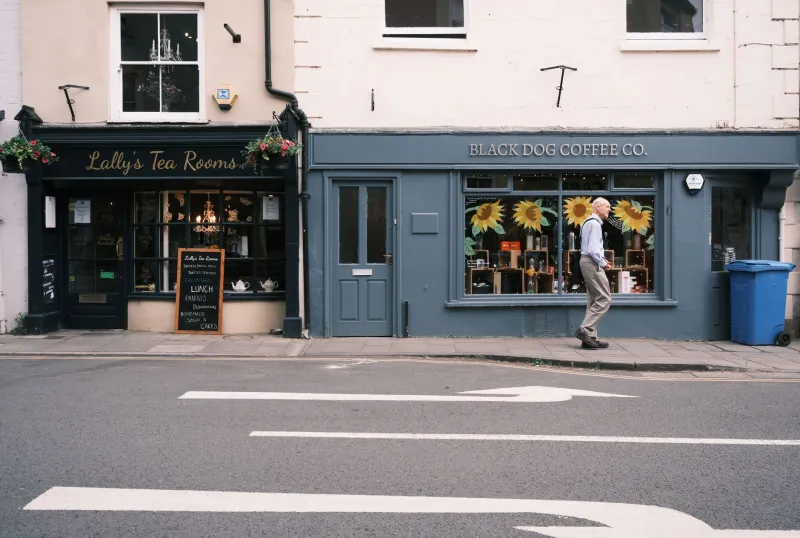
Urban sociologist Ray Oldenburg coined the term "third places" decades ago, but the concept has never been more relevant. Third places — the local diner, the bookshop, the park bench, the neighborhood bar — serve as the social infrastructure of community life. They're where acquaintances become friends, where strangers become neighbors, where the texture of daily life gets its color.
Research has linked regular use of third places to reduced feelings of loneliness, improved emotional resilience, and even better immune function. When people feel like they belong somewhere — when they're known by name at a local spot — they carry that sense of belonging into the rest of their lives.
Neighborhoods designed with walkable retail, communal green space, and gathering spots built into the fabric of the community aren't just more charming. They're literally engineered, even if accidentally, for better human health.
The Suburban Trade-Off Nobody Warned You About
None of this is meant to shame anyone for the housing choices they've made. The American suburban model made a lot of sense for a lot of families for a long time. More space, good schools, a yard — these things matter.
But the health data is increasingly clear that the trade-offs of isolated, car-dependent living are steeper than most people were ever told. Higher rates of anxiety and depression. More sedentary lifestyles. Weaker social networks. Greater loneliness as kids leave home and careers wind down. These aren't abstractions. They show up in doctor's offices and emergency rooms.
The good news is that community-centered development — the kind that puts neighbors within walking distance of each other and within strolling distance of real amenities — is having a genuine renaissance in American real estate. Buyers are starting to ask different questions. Not just "how many square feet?" but "what's within walking distance?" and "will I actually know my neighbors here?"
Designing for Wellness From the Ground Up
At Front Street Village, the connection between neighborhood design and human health isn't an afterthought — it's baked into the concept. Walkable streets, shared green spaces, and a mix of residential and community-oriented amenities aren't just selling points. They're the physical expression of a belief that where people live shapes how people live.
Your home is where you sleep. Your neighborhood is where you actually live. And increasingly, the science is telling us that distinction is everything.
So the next time you're thinking about your health — really thinking about it — maybe don't just look at your plate or your fitness tracker. Take a look at your front door, and what's waiting for you on the other side of it.