Why Your Neighborhood Is the Reason You're Eating Dinner Alone
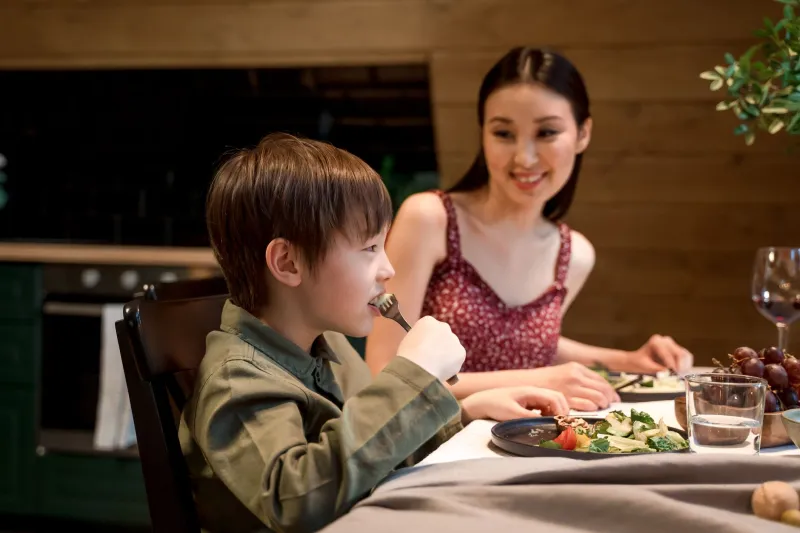
It starts innocently enough. Monday, your teenager needs to be at soccer practice across town by 5:30. Tuesday, your spouse has a late meeting and grabs something on the way home. Wednesday, you're too exhausted from the commute to cook, so everyone fends for themselves. By the time the weekend rolls around, the idea of sitting down together for a real meal feels almost quaint — like something families did on TV in the 1980s.
But here's the thing most people don't consider: your neighborhood might be more responsible for this slow unraveling than your schedule is.
The Logistics Problem Nobody Talks About
Dr. Jillian Mercer, a sociologist at the University of Michigan who studies household behavior and urban design, puts it bluntly. "We tend to blame busy schedules and screen time for the decline of family meals," she says. "But when you dig into the data, the physical environment — how far things are from each other, whether you need a car to access them — is doing an enormous amount of the heavy lifting."
Her research, published in 2022, compared meal frequency and family bonding rituals across households in traditional suburban subdivisions versus walkable, mixed-use communities. The findings were striking. Families in walkable neighborhoods reported eating together nearly 40 percent more often than their suburban counterparts — not because they were more organized or more committed to family time, but because the logistics of their daily lives simply made it easier.
In a sprawling suburb, every errand, every school pickup, every grocery run is a separate car trip. That means family schedules get organized around individual journeys rather than shared rhythms. Mom goes one direction, Dad goes another, kids get dropped off and picked up from three different locations. By dinnertime, everyone is arriving home at different hours, from different places, with different levels of exhaustion.
In a walkable village environment, the geometry changes completely.
What Happens When Everything Is Close
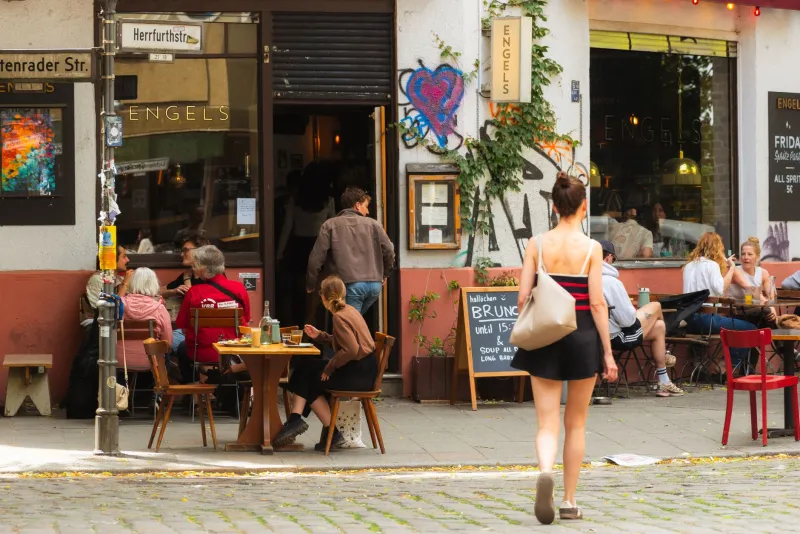
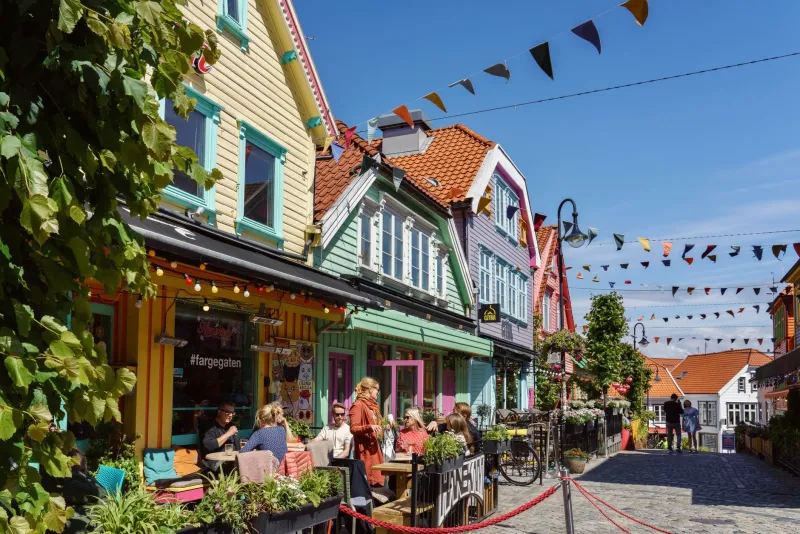
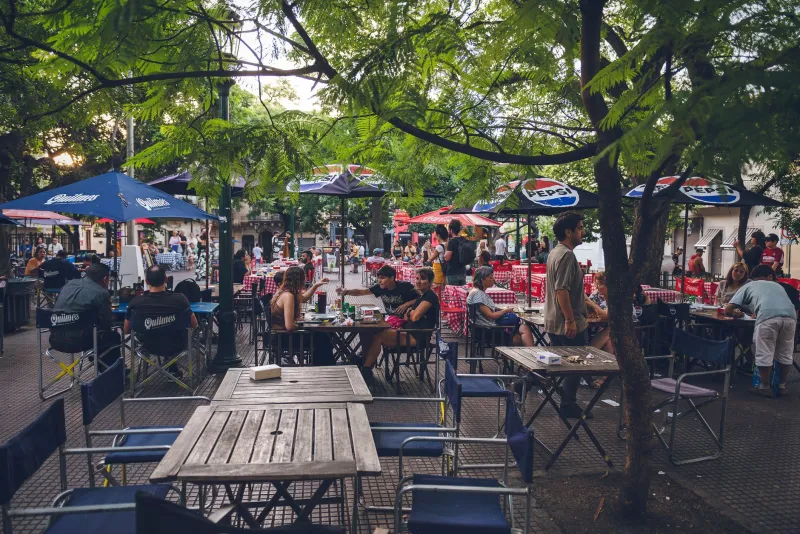
Think about what a typical weekday evening looks like when your neighborhood has a grocery market two blocks away, a handful of restaurants within a five-minute walk, and a school your kids can actually get to on foot or by bike. Suddenly, the calculus shifts.
You can decide at 5 p.m. that you're picking up dinner from the Italian place on the corner. You and your kid can walk over together. That ten-minute walk — one you might not have thought twice about — becomes conversation time. You ask about their day. They actually tell you. You grab the food, you walk back, and you eat together at the table. The whole thing takes an hour, and nobody drove anywhere.
Or maybe you're the family that cooks. Your partner swings by the neighborhood market on the way home from the co-working space down the street, picks up what you need, and you make something together. The kids set the table because they're home, and they're home because school was close enough that they didn't need to be shuttled across three zip codes.
Tamara and Greg Holloway, who moved from a traditional suburban neighborhood outside Columbus to a mixed-use village community two years ago, describe the change as almost disorienting at first. "We were so used to spending evenings coordinating pickups and drop-offs that we didn't even realize we'd stopped eating together," Tamara says. "When we moved here and everything got easier to get to, we suddenly had this... time back. And we started filling it with dinner."
Greg laughs. "Our kids thought something was wrong with us at first. Like, why are we all sitting here together on a Tuesday?"
The Ritual That Holds Families Together
Researchers have spent decades documenting the benefits of shared family meals, and the list is long. Kids who eat regularly with their families show better academic performance, lower rates of anxiety and depression, and stronger communication skills. Teenagers who share meals with parents are statistically less likely to engage in risky behavior. Adults report higher relationship satisfaction and lower stress levels.
But here's the catch: most of the research focuses on whether families eat together, not why some families find it so much harder than others. Neighborhood design is a missing variable that rarely gets discussed in parenting circles or lifestyle magazines.
"We keep putting the burden on individual families to carve out time," says Dr. Mercer. "But if your neighborhood is designed in a way that fragments your day into dozens of separate car trips, you're fighting against the structure of your own environment. The most disciplined family in the world is going to struggle."
Walkable, mixed-use communities essentially remove friction. When the market is nearby, cooking feels manageable. When a good restaurant is a short walk away, a spontaneous weeknight dinner out becomes a realistic option rather than a logistical production. When school and work are close, everyone lands back home around the same time. The conditions for family connection don't have to be manufactured — they just exist.
It's Not About the Food
Here's what's worth saying out loud: the dinner table was never really about the food. It was always about the ritual of showing up in the same place at the same time, with nowhere else you had to be. It's where kids learn to have conversations. Where couples actually talk to each other. Where the texture of daily life gets shared and processed.
Neighborhoods that make it easier to slow down, to not be in the car, to be physically close to the things you need — those neighborhoods are quietly doing something profound. They're creating the conditions for family life to actually happen.
The Holloways put it simply. "We thought we were buying a house," Tamara says. "Turns out we were buying back our evenings."
At Front Street Village, that's kind of the whole point. A neighborhood where the coffee shop, the market, the park, and the school are all within reach isn't just convenient — it's a different way of living. One where dinner together isn't an aspiration you pencil into a planner. It's just Tuesday.
And honestly? That might be the best thing a neighborhood can offer.