The Coffee Shop You Can Walk To Might Be the Most Important Feature of Your Neighborhood
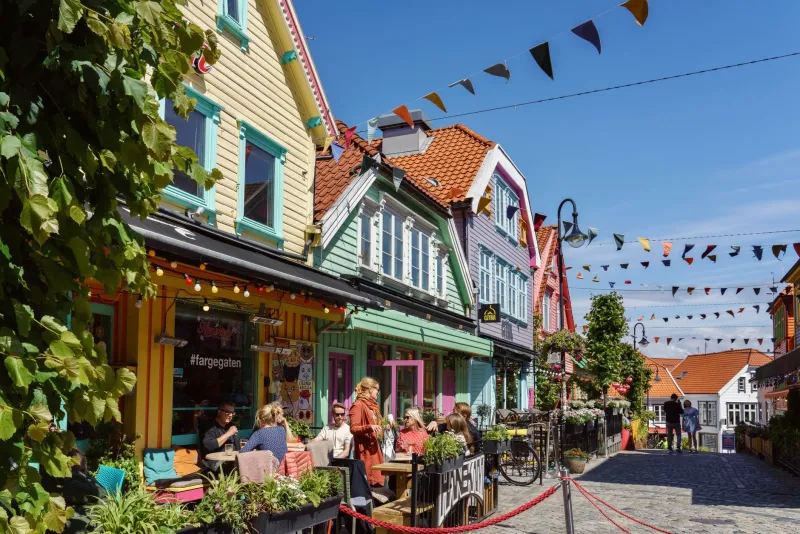
Think about the last time you ran into a neighbor by accident — not a scheduled block party, not a planned playdate, just a spontaneous hey, how've you been? moment. If you're struggling to remember one, you're not alone. For millions of Americans living in conventional subdivisions, those casual collisions almost never happen. And it turns out, that's not a personality problem. It's a design problem.
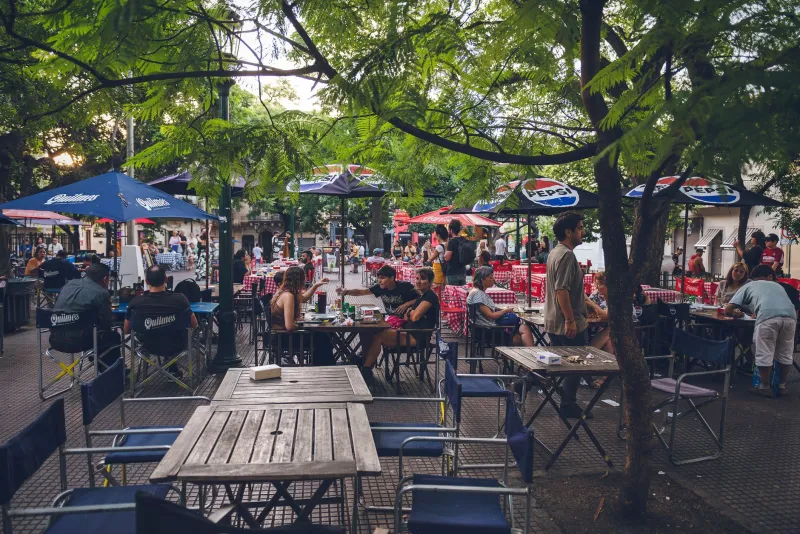
Sociologist Ray Oldenburg coined the term "third place" back in the 1980s, and the concept is deceptively simple. Your first place is home. Your second place is work. Your third place is everything in between — the coffee shop where the barista knows your order, the park bench where you end up talking to strangers, the corner square where somebody's always walking a dog or pushing a stroller. These are the informal, low-pressure spaces where community actually forms.
The problem? Most modern American neighborhoods were built without them.
When Neighborhoods Lost Their Living Rooms
Post-war suburban development in the U.S. was built around a simple formula: houses, yards, garages, and roads connecting them all to somewhere else. It was efficient. It was affordable. And for a generation that had lived through real scarcity, a private home with a private lawn felt like the ultimate achievement.
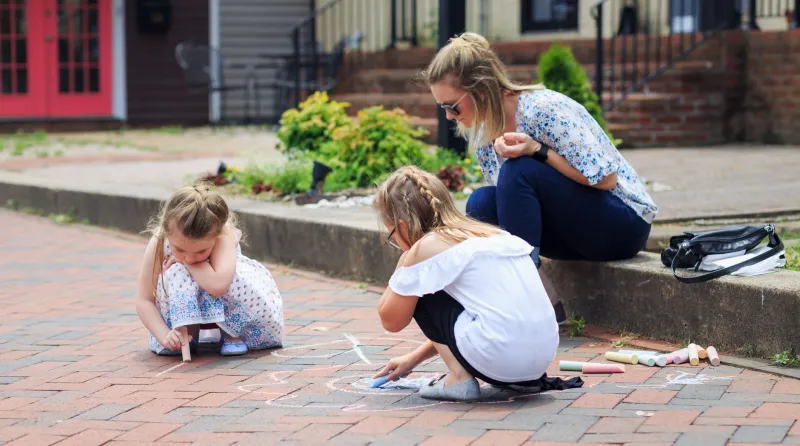
But somewhere along the way, we started to notice something missing. Neighbors who lived thirty feet apart barely knew each other's names. Kids who grew up on the same street didn't have anywhere to hang out that wasn't someone's basement. Adults who worked from home found themselves going entire days — sometimes weeks — without a meaningful in-person conversation outside their own walls.
The infrastructure for accidental connection had been engineered away. And the loneliness statistics that followed weren't a coincidence.
According to research from Brigham Young University, social isolation carries health risks comparable to smoking 15 cigarettes a day. The U.S. Surgeon General has formally declared loneliness a public health epidemic. And urban planners and community researchers are increasingly pointing to the same culprit: neighborhoods that were designed for privacy at the expense of proximity.
What Third Places Actually Do
It sounds almost too simple — put a café or a plaza in a neighborhood and people will feel more connected. But the research backs it up in ways that go deeper than you'd expect.
A study published in the Journal of Environmental Psychology found that residents who had regular access to walkable third places reported significantly higher levels of community belonging and social trust — not just with close friends, but with neighbors they barely knew. That sense of I recognize you, you recognize me turns out to be foundational to how safe and rooted people feel in a place.
Third places also work because they remove the pressure of intentionality. You don't have to plan to be social. You just go get your coffee, and community happens around you. That frictionless quality is what makes them so powerful — and so hard to replicate through apps, community Facebook groups, or organized events that require RSVPs.
There's also an economic dimension. Neighborhoods with walkable commercial and social amenities consistently outperform car-dependent ones in property value retention, especially during economic downturns. Buyers aren't just paying for square footage — they're paying for lifestyle infrastructure.
The Front Street Village Approach
This is exactly the kind of thinking that shapes how a community like Front Street Village is designed from the ground up. Rather than treating retail, green space, and gathering areas as afterthoughts — amenities tacked on after the homes are laid out — the approach here starts with the question: where will people naturally want to be?
That means building in the kinds of spaces that invite lingering. A central square where someone might sit for twenty minutes and end up in three conversations. A café that's close enough to walk to on a Tuesday morning without getting in a car. A park path that loops past enough activity that it never feels lonely, even at 7 a.m.
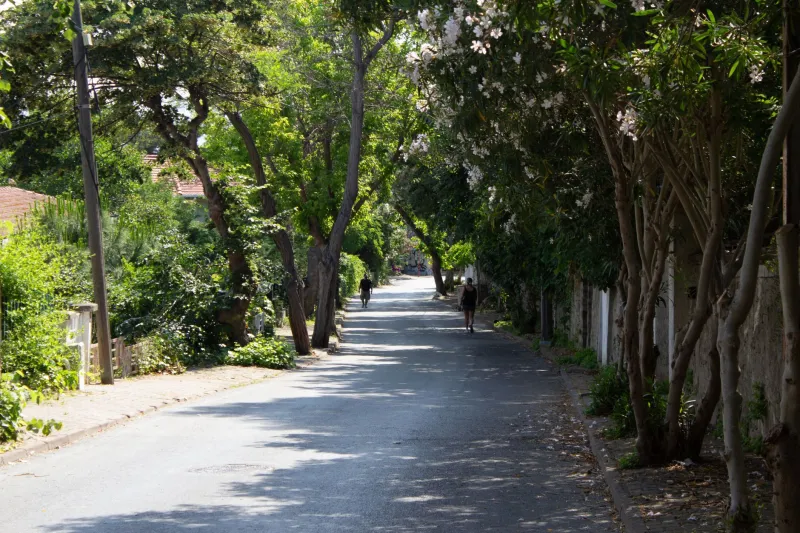
It also means thinking carefully about edges — the transitional spaces between buildings and streets, between private and public. Porches, stoops, outdoor seating, and shaded walkways all serve as what urban designers call "soft edges," places where the boundary between inside and outside is blurry enough that people drift into public life without really deciding to.
When those details are intentional, something interesting happens. People start to feel like they belong to a place, not just that they own a piece of it.
The Difference Between a Neighborhood and a Community
There's a distinction worth sitting with here. A neighborhood is a geographic designation — a collection of homes and streets within some defined boundary. A community is something people feel. And that feeling doesn't come from proximity alone.
You can live twenty feet from someone for a decade and never know their last name. But if you both end up at the same farmers market every Saturday, or if you keep crossing paths at the same dog-friendly green space, something shifts. You start to develop what researchers call "weak ties" — low-intensity social connections that, in aggregate, make you feel embedded in something larger than yourself.
Weak ties, it turns out, are incredibly important. They're how job leads spread through communities. They're how neighbors notice when something seems off with an elderly resident. They're how kids grow up with a sense of place and belonging that follows them into adulthood. And they almost exclusively form in third places.
Asking Better Questions Before You Buy
If you're in the market for a home — or even just thinking about what your next chapter looks like — it's worth adding some questions to your checklist that go beyond the usual.
Not just: How many square feet? What are the schools like? How long is the commute?
But also: Where will I run into my neighbors? Where will I go on a slow Sunday morning? Is there a place I can walk to just to feel like I'm part of something?
Those questions might feel abstract when you're standing in a model home comparing countertops. But six months in, they'll matter more than almost anything else about where you live.
The neighborhoods that get this right — the ones that build in those informal gathering spaces from the very beginning — tend to produce residents who stay longer, invest more in their communities, and genuinely like where they live. That's not a coincidence. That's design doing exactly what it's supposed to do.
And it all starts with something as simple as a coffee shop you can walk to.