Beyond Your Front Door and Your Desk: The Spaces Your Neighborhood Forgot to Build
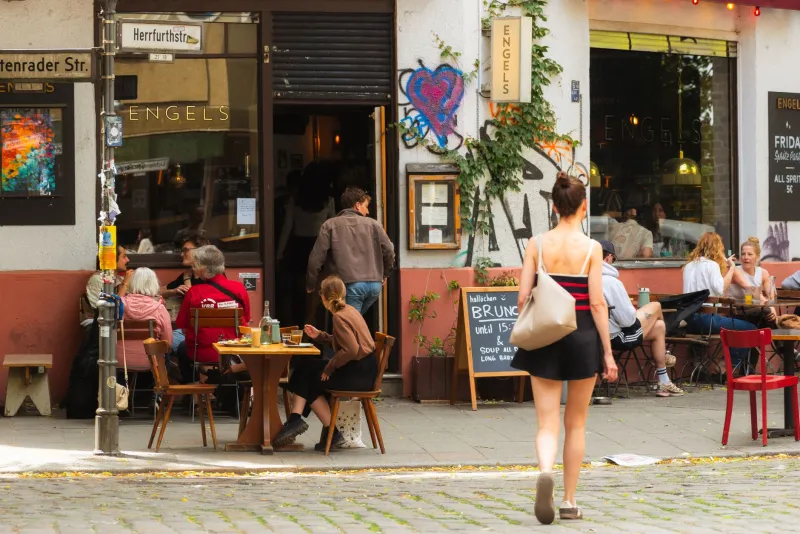
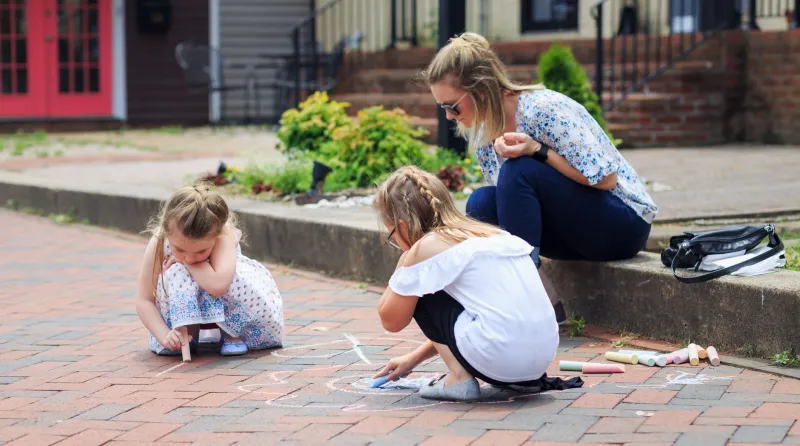
Think about the last time you had a genuinely unplanned conversation with someone you didn't already know. Not a quick nod in a parking lot. Not a wave from the driveway. An actual, unhurried exchange with a neighbor or a stranger that left you feeling a little more connected to the world around you.
For a lot of Americans, that memory takes a while to surface. And that's not an accident.
The Concept That Explains a Lot About Modern Loneliness
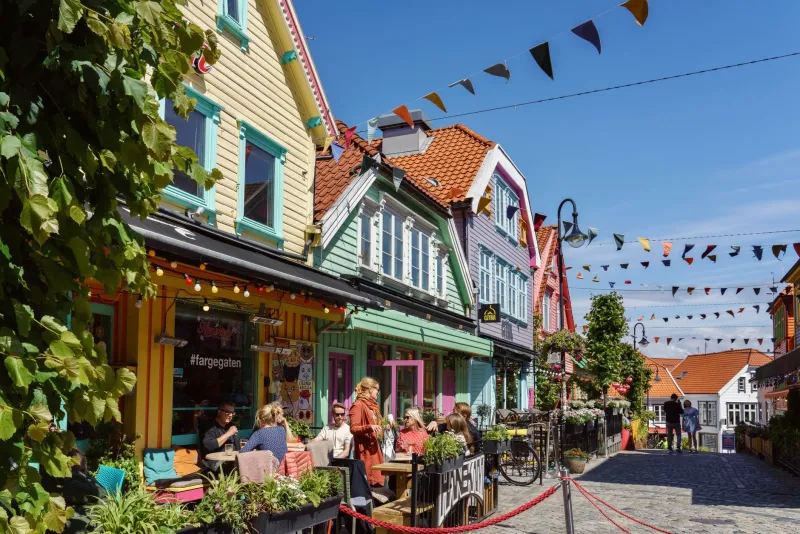
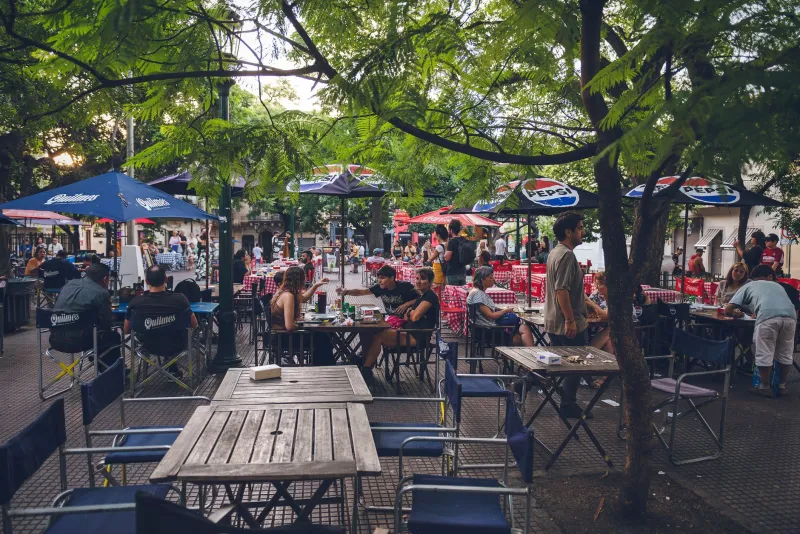
Back in 1989, sociologist Ray Oldenburg introduced an idea in his book The Great Good Place that felt almost obvious once you heard it — and yet described something most of us had stopped expecting from where we live. He called them third places: the locations in our lives that aren't home (the first place) and aren't work (the second place), but somewhere in between. The coffee shop where the barista knows your order. The barbershop where local gossip gets traded alongside haircuts. The park bench where retirees play chess on Tuesday afternoons. The corner bar where people from different walks of life somehow end up on the same side of a conversation.
Third places, Oldenburg argued, are the connective tissue of community life. They're where civic identity gets formed, where friendships between strangers begin, where a neighborhood stops being a collection of houses and starts feeling like an actual place.
The problem? Decades of suburban development largely designed them out of existence.
How Sprawl Quietly Eliminated the Gathering Spot
Post-WWII American development had a formula: residential zones here, commercial zones there, everything separated by arterial roads that require a car to cross. It was tidy on a zoning map. In practice, it meant that the spontaneous, walkable, linger-a-while kind of place Oldenburg described became increasingly rare.
Strip malls don't really count. They're transactional by design — you pull in, you get what you came for, you leave. Big-box retail is even more antiseptic. Even the proliferation of coffee chains, as much as people love them, tends toward efficiency over lingering. Tables are small. Outlets are scarce. The implicit message is: order, sit briefly, move on.
The result has been measurable. The U.S. Surgeon General's 2023 advisory on loneliness and isolation cited a dramatic decline in social connection over recent decades, with nearly half of American adults reporting measurable loneliness. Time spent with friends has dropped sharply since the 1980s. Membership in civic clubs, religious organizations, and neighborhood associations has fallen across the board.
We built communities optimized for privacy and convenience. We got isolation as a side effect.
Third Places Aren't Just Nice — They're Necessary
Here's what the research keeps confirming: the casual, low-stakes interactions that happen in third places aren't trivial. They're foundational.
Those brief exchanges — chatting with someone at the farmers market, bumping into a neighbor at the community board outside the local café — build what sociologists call weak ties. And weak ties, counterintuitively, matter enormously. They're the connections that expose us to different perspectives, that generate job leads, that create the sense that we belong to something larger than our immediate circle. Strong ties (close friends and family) are irreplaceable, but they can also become echo chambers. Weak ties are how communities stay permeable and alive.
Third places also serve as informal safety nets. They're where you notice when someone hasn't been around in a while. Where the elderly widow gets a friendly face every morning. Where kids learn to navigate social situations outside the structure of school. They're the spaces where community actually happens — not on a neighborhood Facebook group, not in a HOA newsletter, but in person, in real time, with all the messiness and richness that entails.
The Difference Between a Third Place and a Commercial Zone
Not every shop or restaurant qualifies. Oldenburg was specific: a true third place has to be accessible (not expensive to enter), comfortable enough to encourage staying, and welcoming to regulars and newcomers alike. It has to feel like it belongs to the people who use it, not just the business that runs it.
This is the distinction that matters when thinking about neighborhood design. Dropping a row of retail storefronts into a development doesn't automatically create a third place. The design of the surrounding environment matters enormously — whether there are places to sit outside, whether foot traffic flows naturally past, whether the space feels like an amenity for residents or a revenue line on a proforma.
Intentional communities like Front Street Village approach this differently. The goal isn't just to put a café within walking distance (though that helps). It's to design the entire environment so that gathering feels natural. That means mixed-use streets where residential and commercial uses coexist rather than repel each other. It means public plazas and green spaces that aren't just decorative but genuinely programmed for people. It means front porches that face sidewalks, not garages. It means paths that lead somewhere worth walking to.
When you design for movement and proximity, third places tend to emerge organically. When you design for car storage and privacy, they don't.
What This Looks Like in Practice
A well-designed village neighborhood doesn't hand you a list of amenities — it creates the conditions for community to build itself. The local coffee spot becomes a third place when it's on a walkable street where you pass it three times a week anyway. The small park becomes one when it's surrounded by homes and foot traffic, not parking lots. The community event space becomes one when it's genuinely accessible and not reserved exclusively for HOA meetings.
Residents in walkable mixed-use communities consistently report something that's harder to quantify but shows up in survey after survey: they actually know their neighbors. Not just their names, but their lives. They run into each other. They stop and talk. The accidental conversations happen because the environment makes them possible.
That's not a small thing. In a country where loneliness has been declared a public health crisis, the design of our neighborhoods is a public health issue.
Building the Neighborhood You Actually Want to Live In
If you're thinking about where to put down roots — whether you're buying your first home or your fifth — it's worth asking not just about square footage and school ratings, but about third places. Where will you go on a slow Sunday morning? Where will your kids encounter adults who aren't their parents or teachers? Where will you bump into someone you didn't plan to see?
Those questions used to feel like luxuries. Increasingly, the research suggests they're essentials.
The good news is that more developers and planners are listening. The mixed-use village model — walkable, human-scaled, built around genuine gathering spaces rather than just efficient land use — is having a genuine moment. Not because it's trendy, but because people are starting to feel the absence of what it offers.
Oldenburg wrote that third places are where community comes alive. At Front Street Village, that's not a marketing line. It's the design brief.