Size Isn't Everything: How Your Neighborhood's Design Shapes Your Life More Than Your Floor Plan
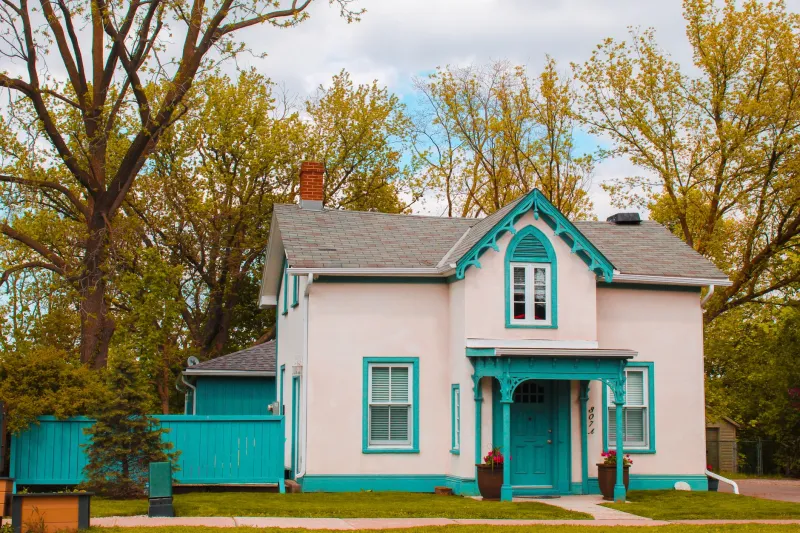
Let me ask you something. Think back to the happiest place you've ever lived. Not the biggest. Not the most expensive. The happiest.
For most people, when they really sit with that question, the answer isn't a square footage number. It's a feeling. It's the memory of a neighbor's porch light on a warm evening, or a corner café where you became a regular, or a park where your kids made their first real friends. It's the texture of daily life — not the dimensions of a dining room.
And yet, when most Americans go house hunting, we default to the same metrics: square footage, bedroom count, bathroom count, lot size. More. Bigger. Better.
What if we've been measuring the wrong things?
The Myth of More Space
American homes have gotten dramatically larger over the past fifty years. According to the U.S. Census Bureau, the average size of a newly built single-family home has grown from around 1,500 square feet in the early 1970s to over 2,300 square feet today — even as average household size has shrunk. We have more space per person than at any point in history.
And yet, surveys consistently show that Americans don't feel like they're living better. Rates of loneliness, social disconnection, and reported dissatisfaction with daily life have trended in the wrong direction for decades. Something isn't adding up.
The uncomfortable truth is that square footage is a pretty poor predictor of happiness. What actually moves the needle, according to researchers and urban designers alike, is something harder to put in a listing: the quality of the spaces between the homes.
What Architects Call "Third Places"
Sociologist Ray Oldenburg coined the term "third place" back in the 1980s to describe the informal gathering spots that exist outside of home (the first place) and work (the second place). Think barbershops, coffee shops, parks, front porches, community squares — places where people come together without agenda, without transaction, just to be around each other.
Oldenburg argued that third places are essential to community health. They're where friendships form, where neighbors become more than strangers, where a collection of houses becomes an actual neighborhood.
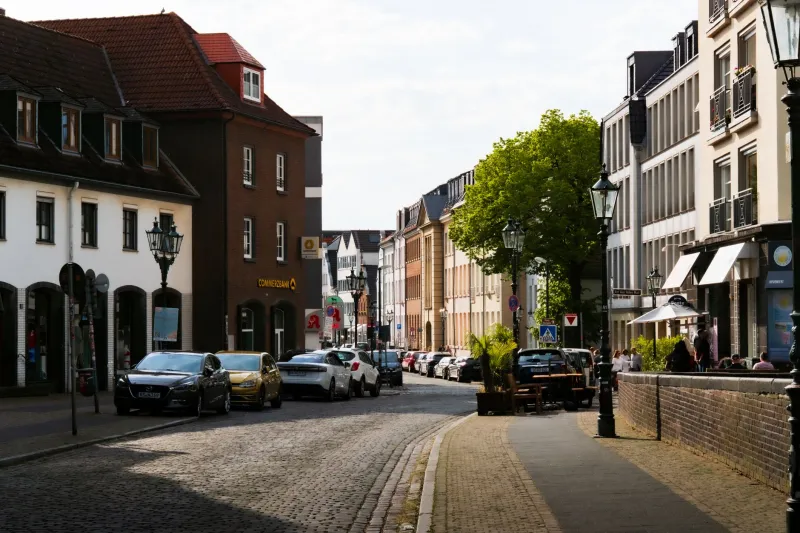
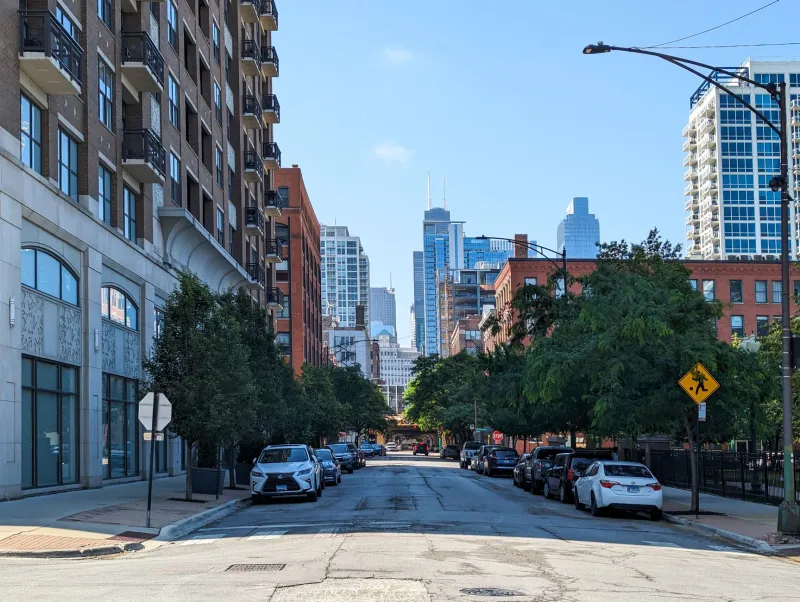
Here's the problem: most American suburbs were designed without them. Cul-de-sacs and garage-front homes don't naturally generate third places. Strip malls surrounded by parking lots don't either. When you have to drive everywhere and there's nowhere to linger when you arrive, third places wither — and so does community.
This is the design problem that intentional communities like Front Street Village are specifically built to solve.
The Front Porch Isn't Just Aesthetic
There's a reason Front Street Village emphasizes front-facing architecture, covered walkways, and public gathering spaces throughout the community. It's not decorative. It's functional — in the deepest sense of that word.
A front porch facing the street is an invitation. It signals that the people inside are open to the neighborhood, not sealed off from it. When a home is designed with a garage at the front and the living spaces tucked behind, the message — intentional or not — is the opposite.
Urban designer and author Jeff Speck has written extensively about how small architectural choices compound into neighborhood-wide culture. A street with front porches and sidewalks generates casual interaction. A street without them generates isolation, even when the houses are enormous and the yards are immaculate.
"We spent years in a beautiful house," says Carla M., who relocated to a planned community in Georgia with her husband and two teenage daughters. "Four bedrooms, three and a half baths, a finished basement. And I barely knew the names of the people next door. We moved somewhere smaller with a real community feel, and within six months, my kids had a whole social life I didn't have to orchestrate."
That's not an accident of personality. It's an outcome of design.
Walkability Is a Feature, Not a Bonus
Real estate listings have started including Walk Scores as a data point, but many buyers still treat walkability as a nice-to-have rather than a genuine priority. That's starting to change — and the shift is most visible among families with children and adults over fifty.
For parents, a walkable neighborhood means kids can have the kind of low-stakes independence that used to define American childhood. Walking to a friend's house, biking to get a snack, hanging out at a community park without a scheduled playdate — these experiences build confidence and social skills in ways that chauffeured suburban life simply can't replicate.
For older adults, walkability is increasingly a health issue. Studies published in the Journal of the American Geriatrics Society have linked walkable neighborhoods to lower rates of obesity, reduced cognitive decline, and higher self-reported wellbeing among adults over 65. The ability to walk to a coffee shop or a pharmacy isn't just convenient — it's genuinely protective.
At Front Street Village, walkability is baked into the layout from the ground up. Sidewalks are wide enough to walk side-by-side. Shade trees line the paths. Retail and dining are close enough to reach on foot without it feeling like a trek. These aren't cosmetic choices — they're decisions that shape how residents actually spend their days.
Rethinking What "Good" Looks Like
Here's a thought experiment. Imagine two homes.
Home A is 3,200 square feet in a traditional subdivision. The nearest coffee shop is a twelve-minute drive. The nearest park requires a car. You've lived there two years and know your immediate neighbors by sight, but not by name. The house is beautiful. The neighborhood is quiet. But quiet, you've realized, isn't the same as peaceful.
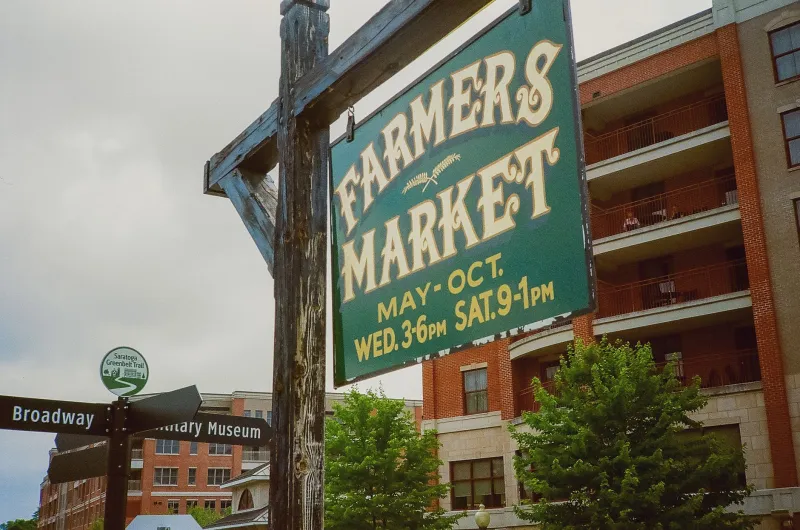
Home B is 1,800 square feet in a walkable village community. There's a café a four-minute walk away. A community green where people actually gather on weekends. Neighbors who know your dog's name. A farmers market that sets up every Saturday morning close enough to smell from your porch. The rooms are smaller, but the life lived in and around them is bigger.
For a growing number of Americans, Home B isn't a compromise. It's the upgrade.
Community Is the Amenity
The real estate industry loves amenities. Granite countertops, stainless appliances, spa bathrooms. And those things are genuinely nice. Nobody's arguing against a good kitchen.
But the amenity that Front Street Village is most intentional about offering isn't a feature inside any individual home. It's the community itself — the neighbors, the gathering spots, the rhythm of daily life that emerges when a neighborhood is designed for people rather than cars.
That's a harder thing to photograph for a listing. It doesn't show up in a square footage number. But ask anyone who's experienced it, and they'll tell you it's the thing they'd least want to give up.
Maybe the most important question to ask when you're choosing your next home isn't how big is it? Maybe it's what kind of life will I live right outside the front door?
At Front Street Village, we think that question deserves a pretty great answer.