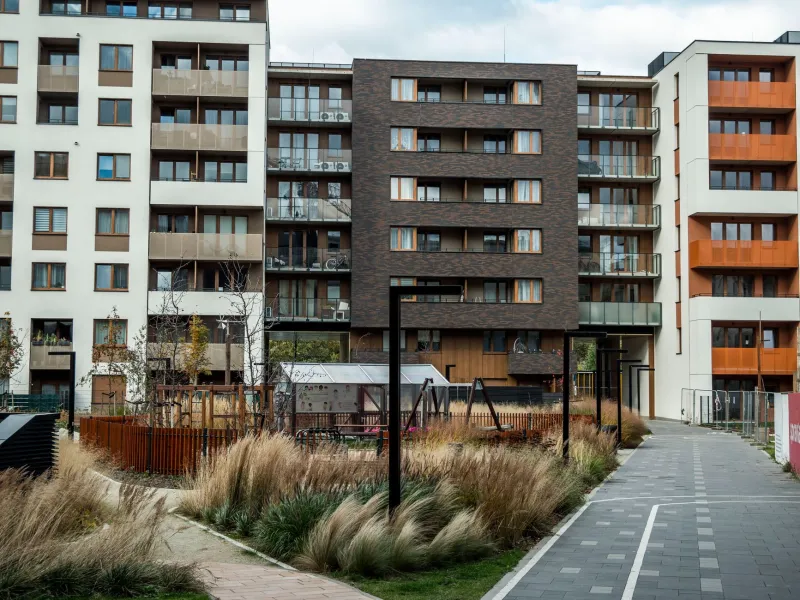
What Your Tax Bill Might Be Telling You About Where You Live

Most people spend months comparing mortgage rates, negotiating closing costs, and agonizing over square footage before buying a home. What they rarely do? Ask their accountant about the neighborhood itself.
That's a bigger oversight than most buyers realize. Where you live — not just what you buy — can have a surprisingly significant impact on your tax picture. And for residents of walkable, mixed-use village communities, that picture is often a lot more favorable than it looks at first glance.
Let's dig into what that actually means.
The Property Tax Piece (It's More Complicated Than You Think)
Property taxes are the obvious starting point, but the conversation is rarely as simple as comparing one town's millage rate to another's. The real question is how your local assessor determines the value of your home — and that methodology varies widely from county to county.
In many jurisdictions, walkability scores and proximity to amenities are increasingly factored into home valuations. That sounds like it would drive your assessed value up, but here's the nuance: in mixed-use developments, commercial components of the community often absorb a meaningful share of the tax burden. The coffee shop, the co-working space, the corner market — those businesses pay property taxes too, and that revenue flows into the same local coffers that fund your schools and roads.
The practical effect? In some well-structured village developments, residential homeowners benefit from a broader tax base without shouldering the entire load themselves. It's the kind of thing your real estate agent probably won't bring up, but a good tax professional absolutely should.
Homestead Exemptions: Are You Leaving Money on the Table?
If you haven't revisited your homestead exemption lately, this is your reminder. Most states offer some version of a homestead exemption — a reduction in the assessed value of your primary residence, which directly lowers your property tax bill. The amounts vary dramatically: Florida's is among the most generous in the country, while other states cap benefits at a few thousand dollars off assessed value.
What catches people off guard is that exemptions often come with deadlines, residency requirements, and paperwork that doesn't file itself. New homeowners in particular tend to miss the first filing window, sometimes losing out on hundreds of dollars in savings for an entire year.
Beyond the standard homestead exemption, some states and municipalities offer supplemental credits tied to specific development types — including newer mixed-use or planned unit developments. These are less commonly advertised and worth a direct conversation with your county assessor's office or a local CPA who knows your market.
The Work-From-Home Factor and Home Office Deductions
Here's where village living gets interesting from a federal tax perspective. If you work from home — even part of the time — you may be eligible to deduct a portion of your home expenses, including mortgage interest, utilities, and insurance, proportional to the square footage dedicated to your workspace.
But the connection to village living runs deeper than that. One of the underappreciated draws of walkable mixed-use communities is that they make remote work genuinely sustainable. You can walk to grab lunch, run errands on foot, and actually decompress between calls without getting in a car. For people who've fully transitioned to remote or hybrid work, the choice to live in a walkable neighborhood isn't just a lifestyle preference — it can reshape your daily cost structure in ways that show up on your tax return.
Fewer commuting miles also means lower transportation costs, which, while not a direct deduction for most W-2 employees, absolutely factors into your true cost of living calculation. And for self-employed residents, mileage and transportation deductions become even more relevant when your daily errands are a five-minute walk rather than a fifteen-mile round trip.
Community Investment Credits: The Ones Nobody Talks About
This is the layer that genuinely surprises most people. Depending on your state and the specific structure of your development, there may be tax credits available tied to community investment, historic district participation, or new urbanism incentives.
Several states have enacted legislation encouraging walkable, transit-oriented, or mixed-use development — and some of those incentives trickle down to individual homeowners in qualifying communities. Others are targeted at developers but structured in ways that affect HOA fees or community amenity funding, indirectly benefiting residents.
The catch is that these credits are often buried in state tax code, rarely publicized, and frequently underutilized simply because no one thinks to ask. A tax professional who works with real estate clients in your specific area is your best resource here. The question isn't whether these benefits exist — it's whether anyone's paying attention.
The Long Game: Appreciation, Liquidity, and Tax Efficiency
Beyond annual tax bills, there's a longer-term financial case for village living that intersects with tax strategy. Walkable, amenity-rich communities have demonstrated stronger and more consistent appreciation in many markets — a fact that matters enormously when you eventually sell.
The federal capital gains exclusion on primary residence sales — up to $250,000 for single filers and $500,000 for married couples filing jointly — applies regardless of how much your home appreciated. But the size of that gain is obviously shaped by how well your neighborhood holds and grows value over time. Communities with built-in walkability, diverse uses, and genuine social infrastructure tend to hold their appeal across market cycles in ways that car-dependent subdivisions sometimes don't.
That's not a guarantee, and no one should buy a home purely as a financial instrument. But it's worth factoring into a complete picture of what village living actually costs — and what it returns.
What to Ask Before You Buy
If you're seriously considering a mixed-use village community, here are a few questions worth raising with a tax professional before you close:
- What is the current assessed value of comparable homes in this development, and how is that assessment likely to change?
- What homestead exemptions am I eligible for, and what's the filing deadline?
- Does this development qualify for any state or local community investment credits?
- How does the commercial tax base affect overall residential tax burden in this district?
- If I work from home, how does this property's layout affect my home office deduction eligibility?
None of these are trick questions. They're just the ones most buyers forget to ask — and the answers can genuinely shift the math on whether a particular home is as affordable as it looks.
The Bottom Line
Village living gets talked about a lot in terms of lifestyle — the walkability, the community, the sense of place. All of that is real. But the financial case is more layered than most buyers realize, and the tax dimension is one of the most consistently overlooked pieces of the puzzle.
The neighborhood you choose isn't just a backdrop for your life. It's a financial decision with implications that show up every April — and every year you own your home. It's worth doing the homework.
Your accountant will thank you for asking.